The collection of anatomical models of the university of Siena is dated around the XVIII century.
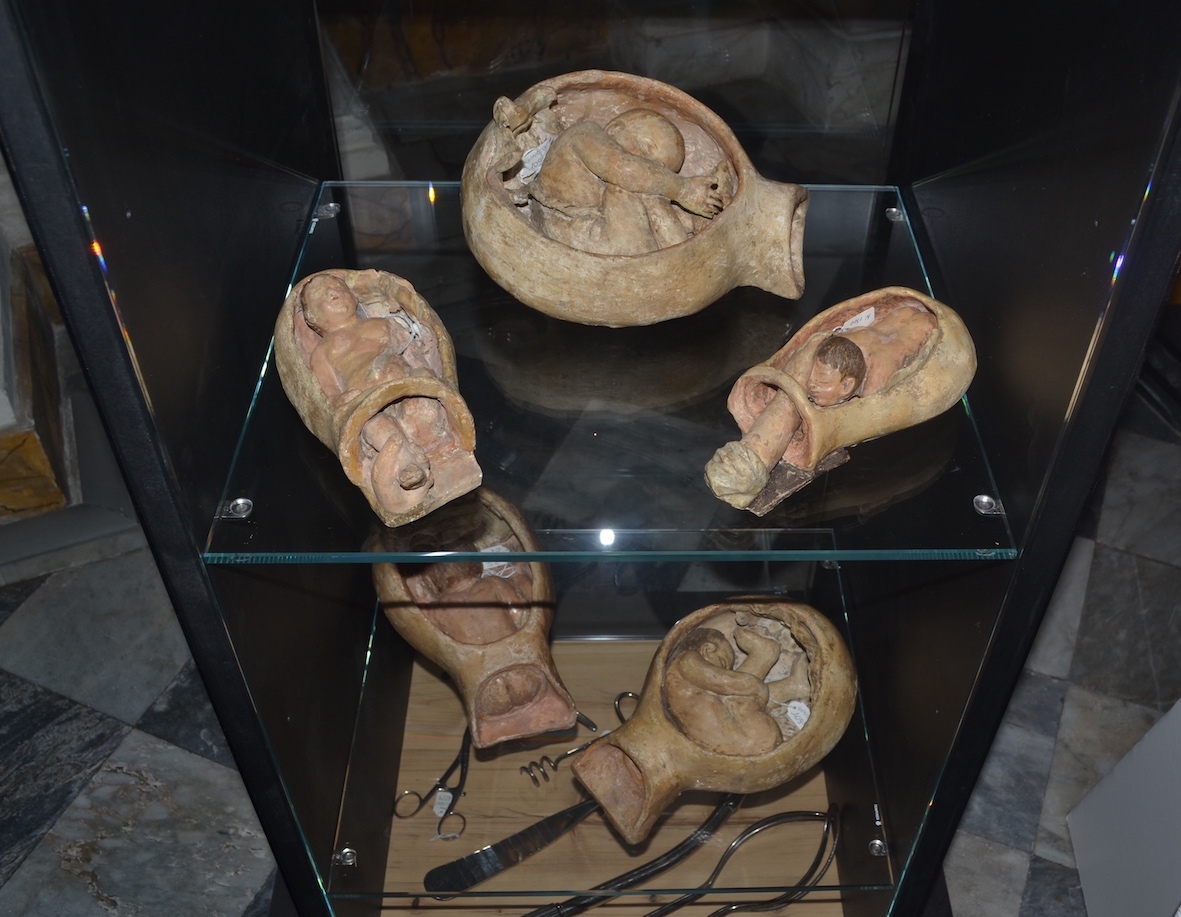
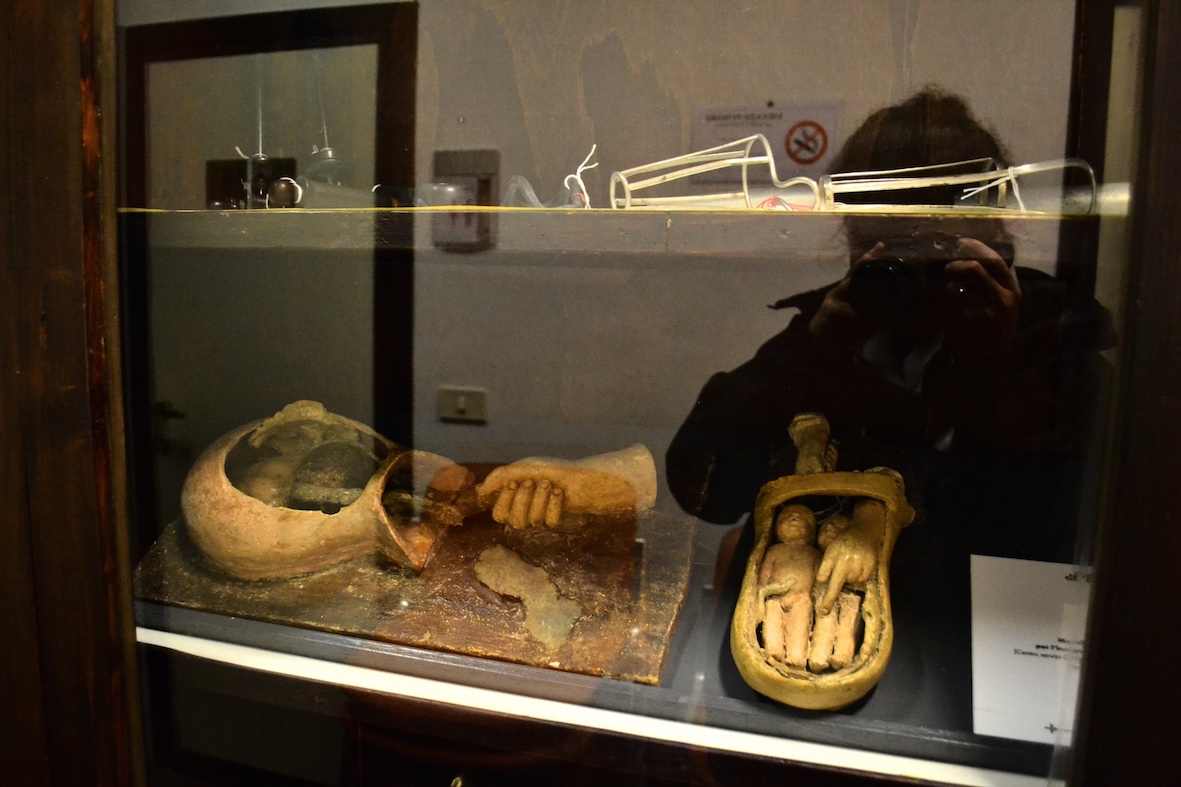
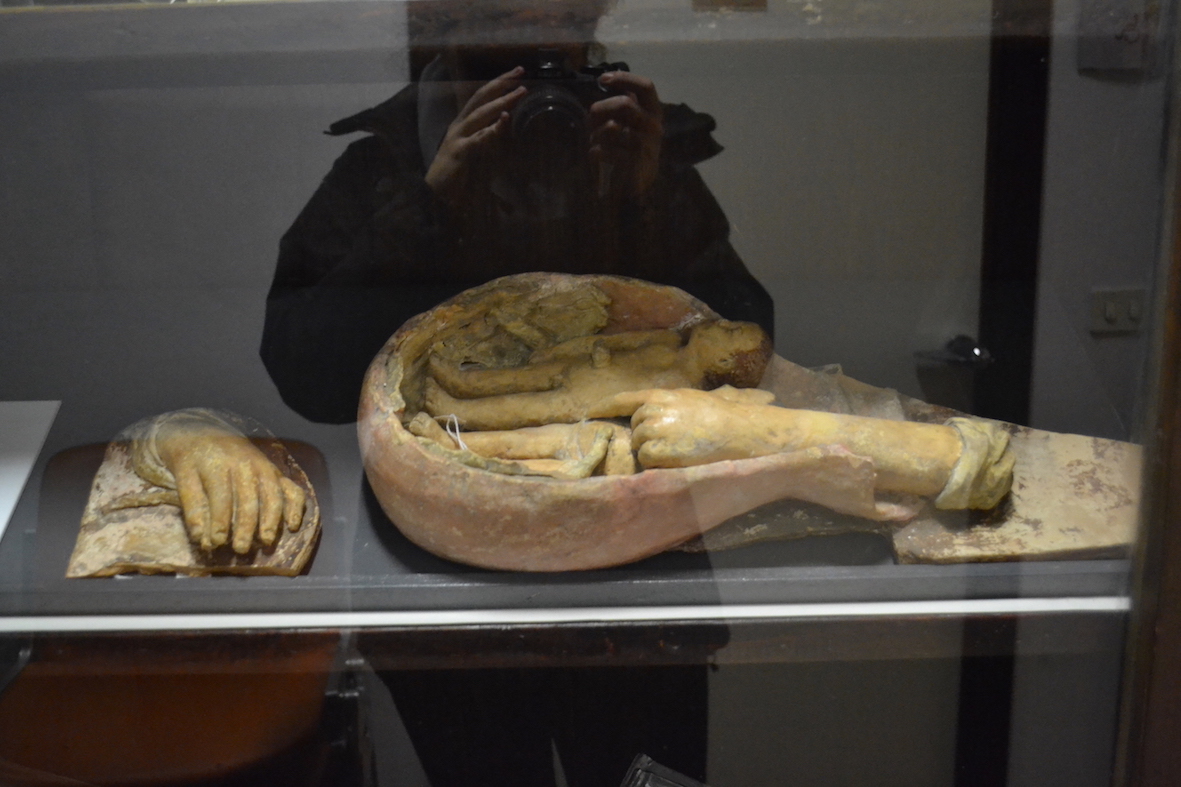
Nowadays, only 9 of the 40 original models, made of pottery, survived and are preserved in the Medical Equipment Museum of Siena.1
In the development of Obstetrical discipline, the models always had a great relevance: through them, the students and the midwives had the chance to understand better how to assist the woman in labour so that the infant could not be delivered in risky positions.
The collection exhibited was realized by choice of Dr. Lettore Bartolommei, a teacher of Obstetrician education at the Santa Maria della Scala Hospital.
He based his teaching on the use of these models to permit the students to improve their knowledge also in default of clinical materials.2
In fact, the task of the collection is to illustrate the different evolutionary steps of the foetus, the various positions that the foetus takes on during the pregnancy and also the employment of the obstetric techniques and instruments.3
- Photos and main text by Federica Valcarenghi and Giulia Palmieri (December 2017)
- Courtesy of Dr. Davide Orsini, director of the SIMUS
- Locate the item on this Google Map
Bibliography
– Francesca Vannozzi (a cura di), Nascere a Siena: il parto e l’assistenza alla nascita dal Medioevo all’età moderna, NIE, Siena 2005, pp. 138