Antica Farmacia Pesci
INTRODUCTION
The Antica Farmacia Pesci (Antique Pesci Pharmacy) is one of the largest historical pharmacies in Rome. It dates back to the early second half of the 16th century. Since its foundation, it has been located in Piazza Fontana di Trevi (currently named Via della Stamperia, 89) on the ground floor of Palazzo Castellani, even though it moved from and to different premises, all facing the magnificent square.1
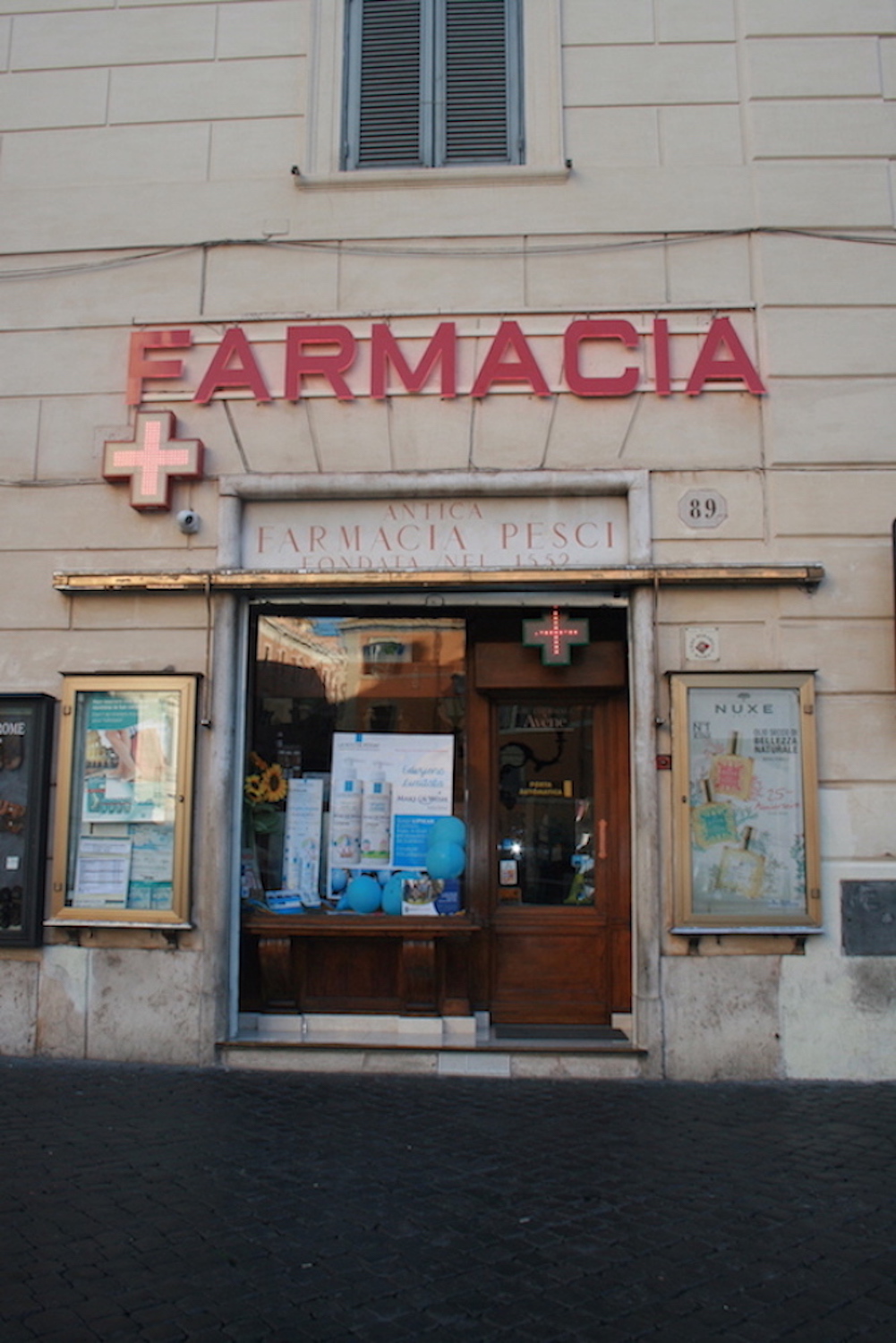
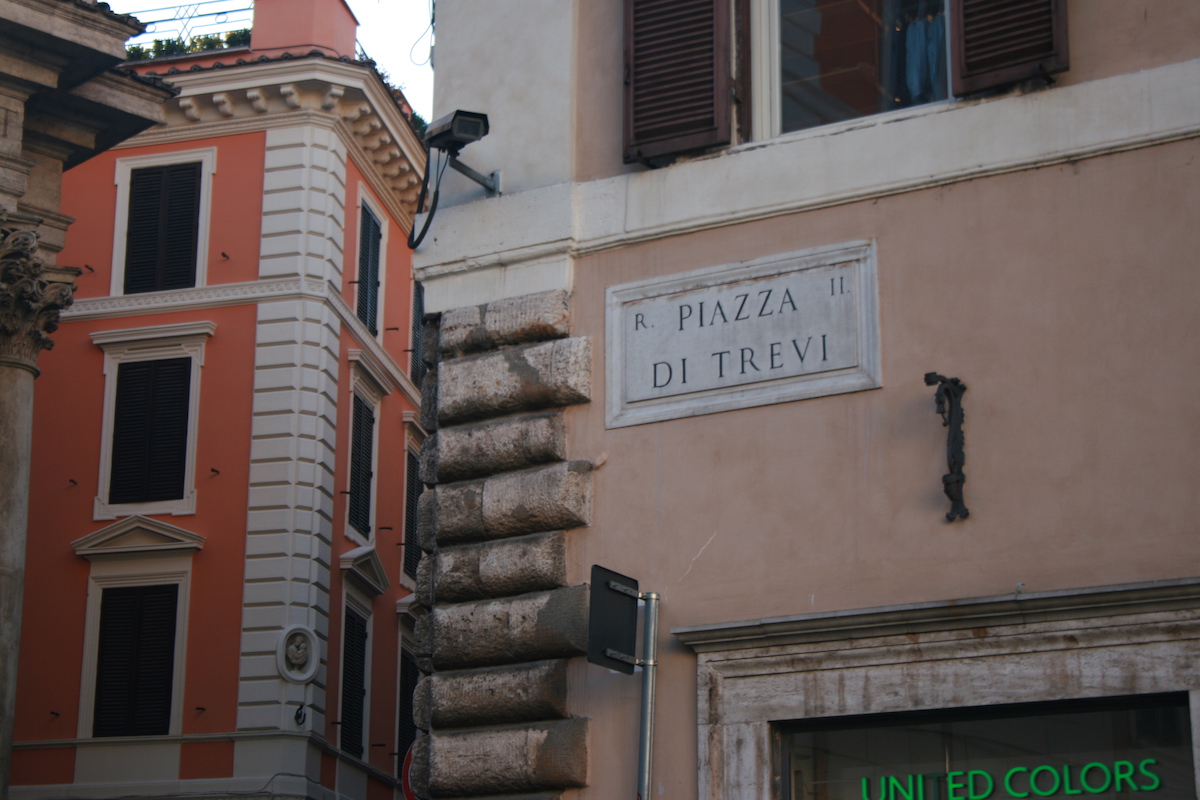
It is also known that one of the previous premises of the pharmacy was located exactly in front of the current site. Place that faced the square anyway. (↙)
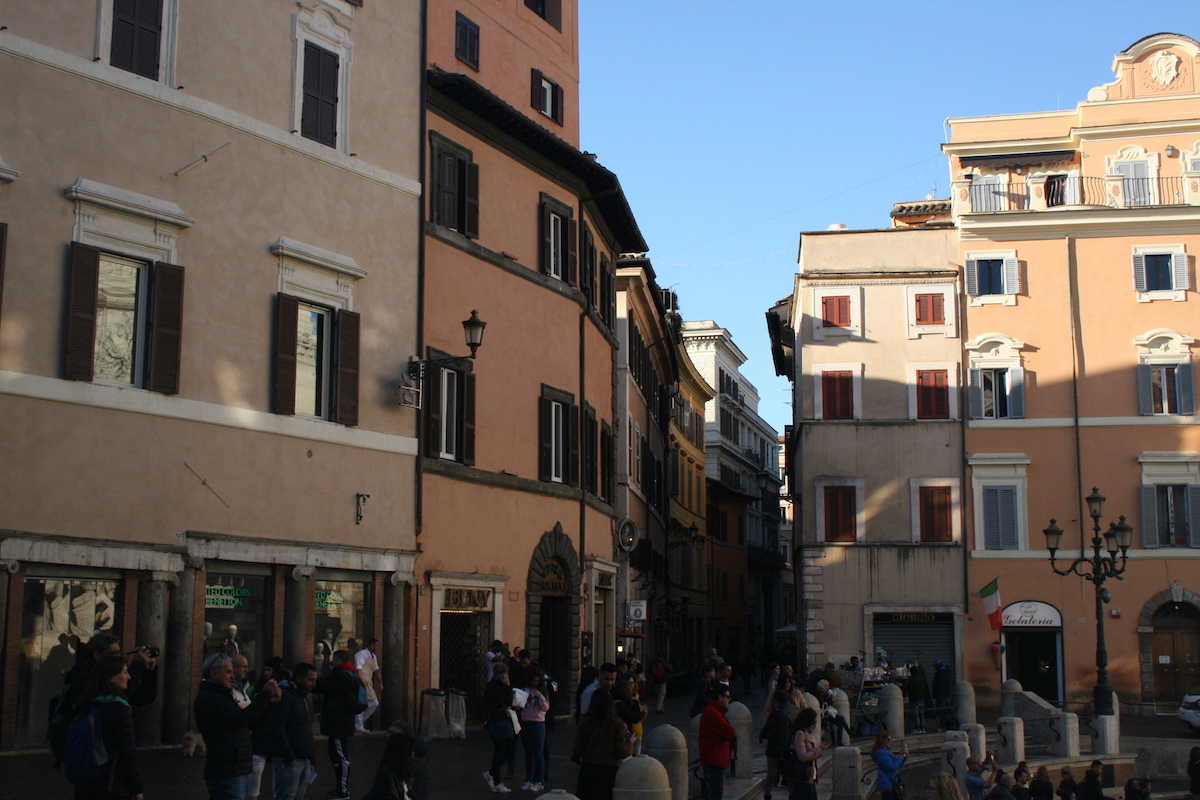
The previous site of the pharmacy: the orange building on the left side. (↖)
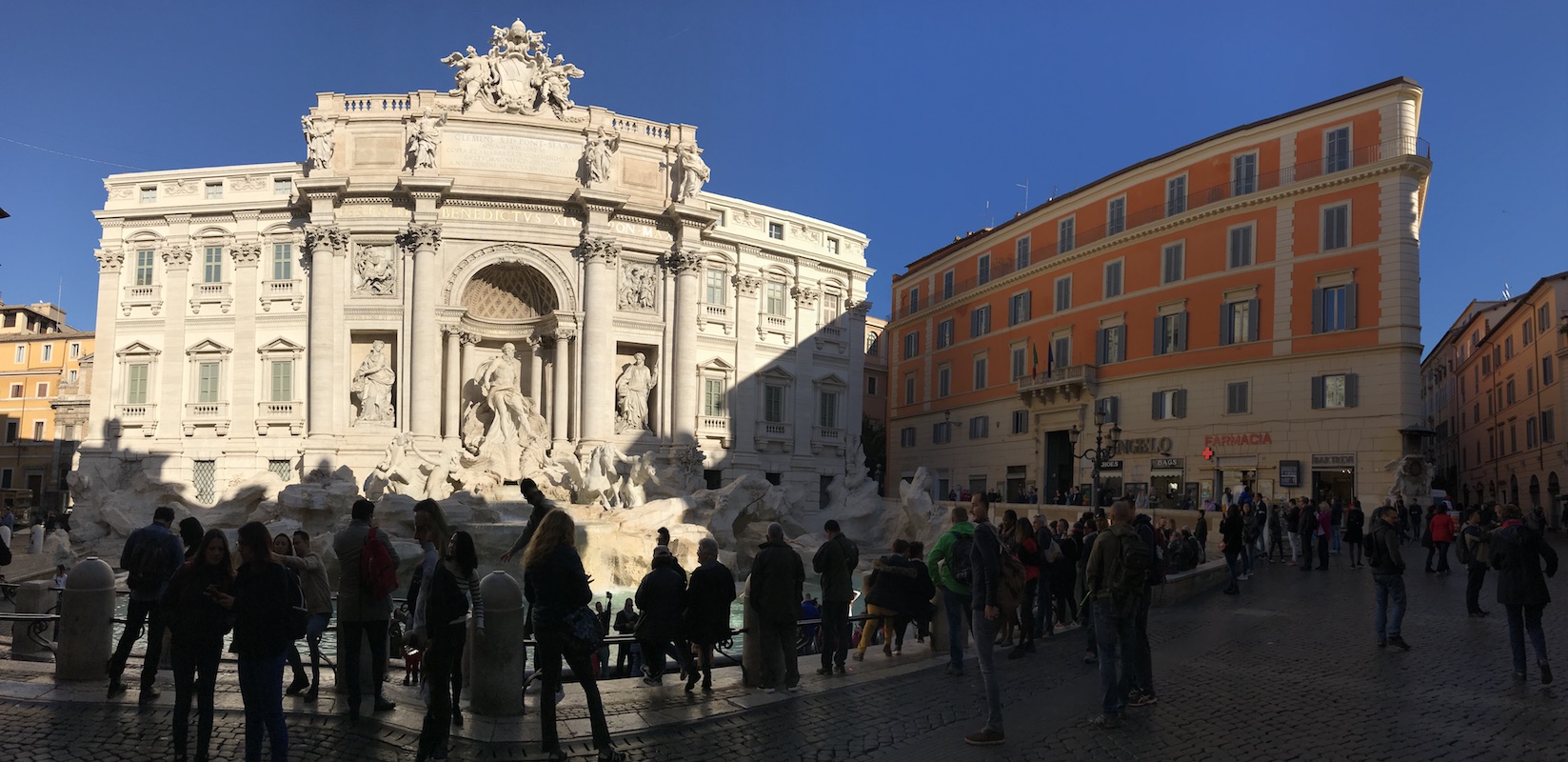
The frontal view of the pharmacy next to the Trevi’s Fountain. (↑)
HISTORY
Certainly established by the papacy, this pharmacy used to distribute medicines to the poor and needy people living near the Quirinal that, at that time, was the residence of the Pope.2
The spicery and wax shop (called “Spetiaria et Cereria”) – run for many centuries first by Mansueti and Corsi families and then by the Pesci family – has always been under papal protection and a reference point for its therapeutic products.3
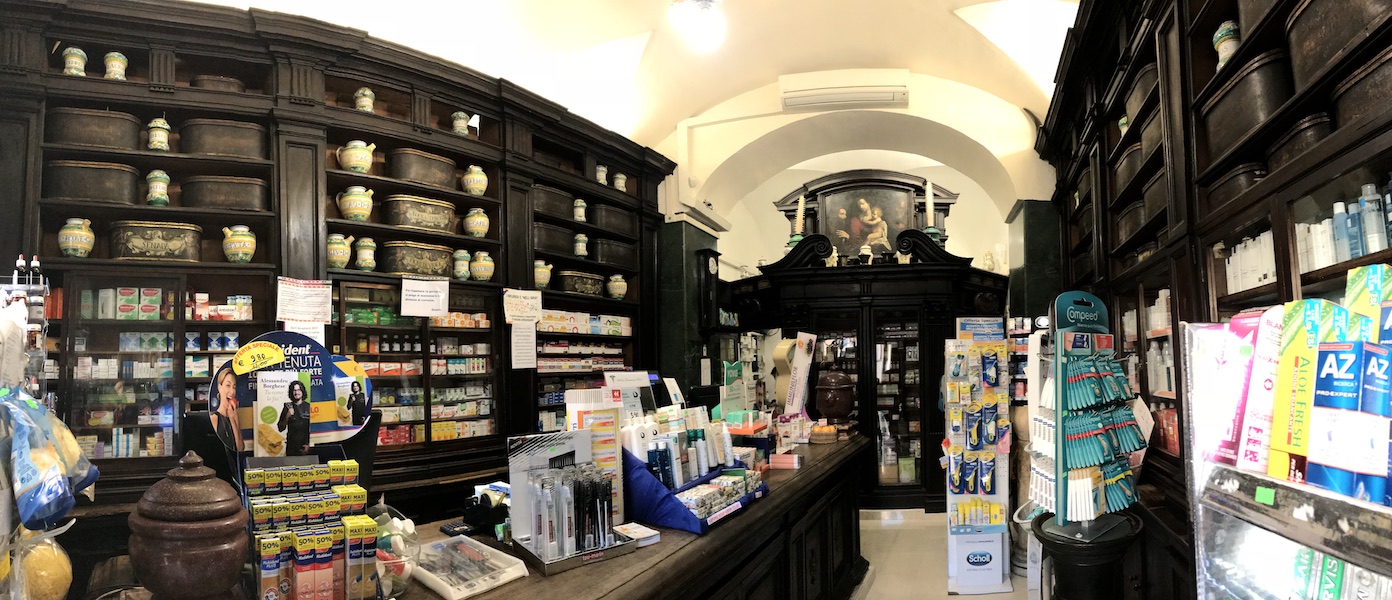
Today, the Antica Farmacia Pesci, looks almost like it used to be in the past. The inside, that is intact and well preserved, has kept its entirety and the antiquity of its furnishings, such as the remarkable ancient mortars.
THE INTERIOR
It’s one of the very few cases where the antique furnishings and equipment are still there. Although is no longer possible to see the original display of them, we can however admire some particular elements:
- The ancient doors. One of them (here posted) gave the access to the laboratory.
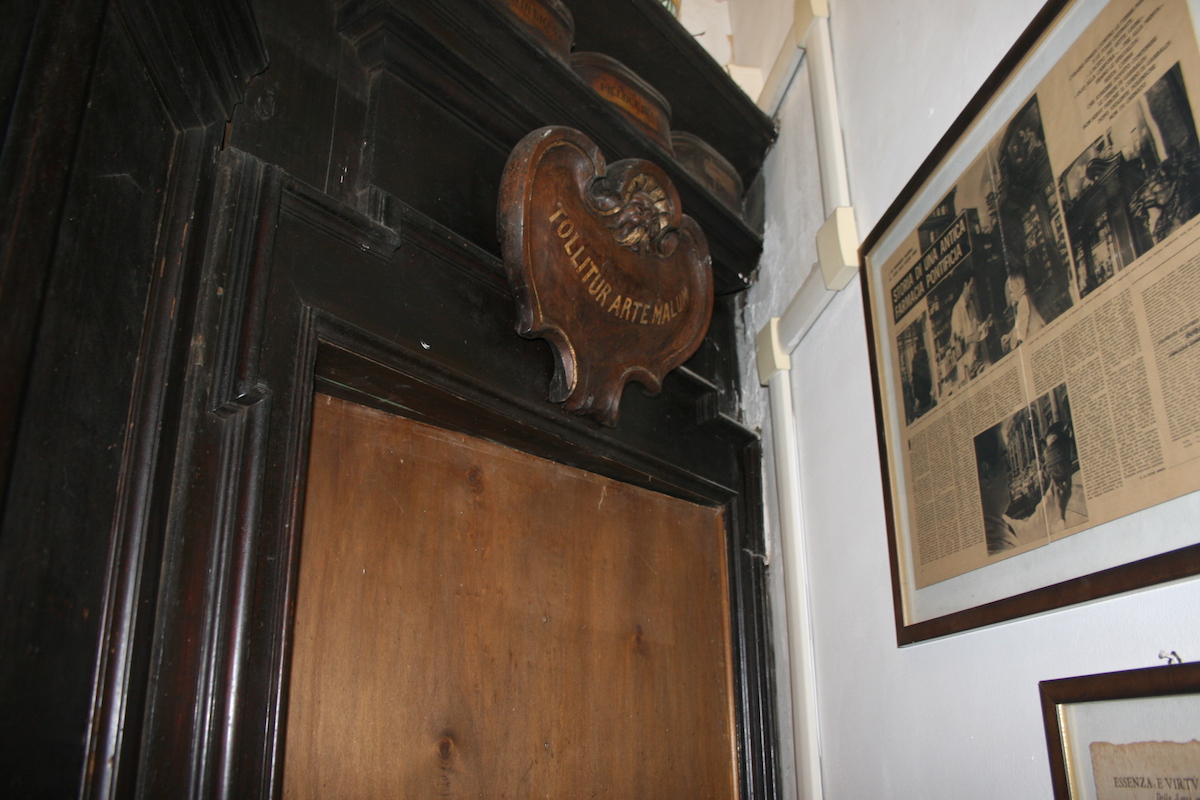
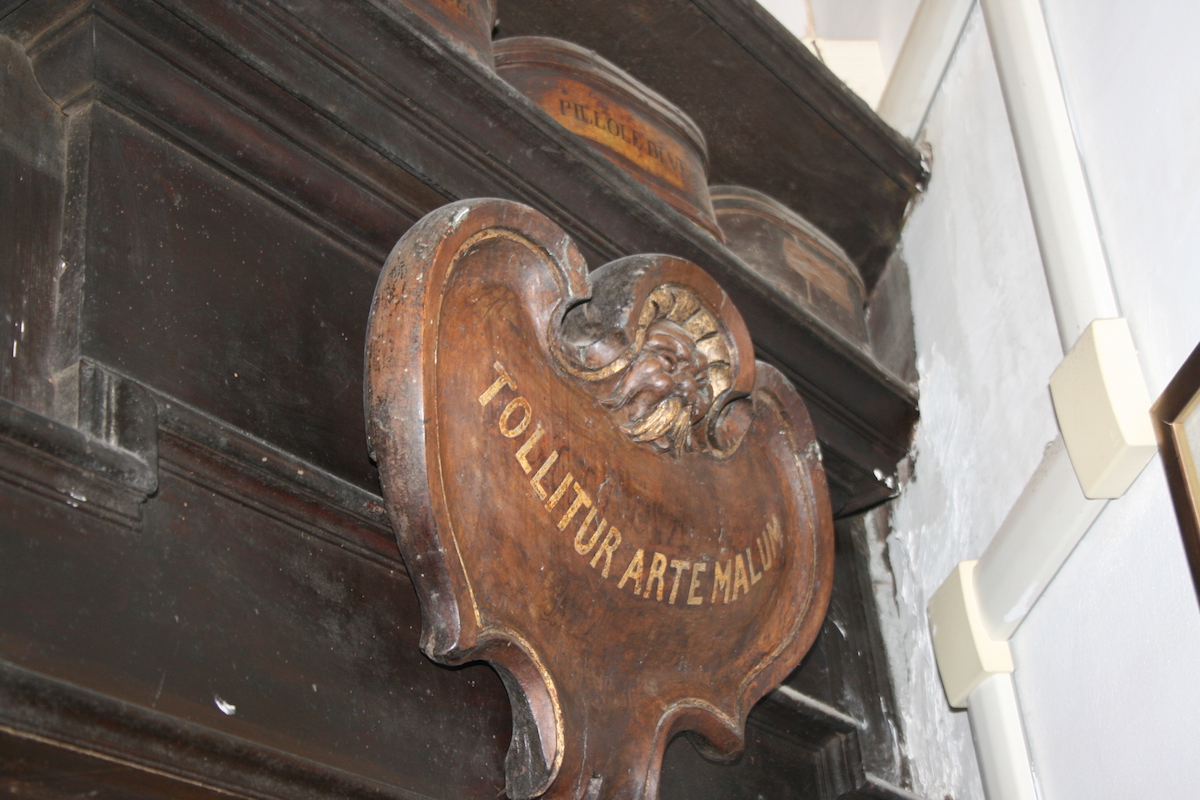
(↖) Here it is written “Tollitur arte malum” that refers to the ability of medicine to set free from illness. (↗)
- The sixteenth-century shelves on which sandalwood boxes and ceramic jars are still displayed.
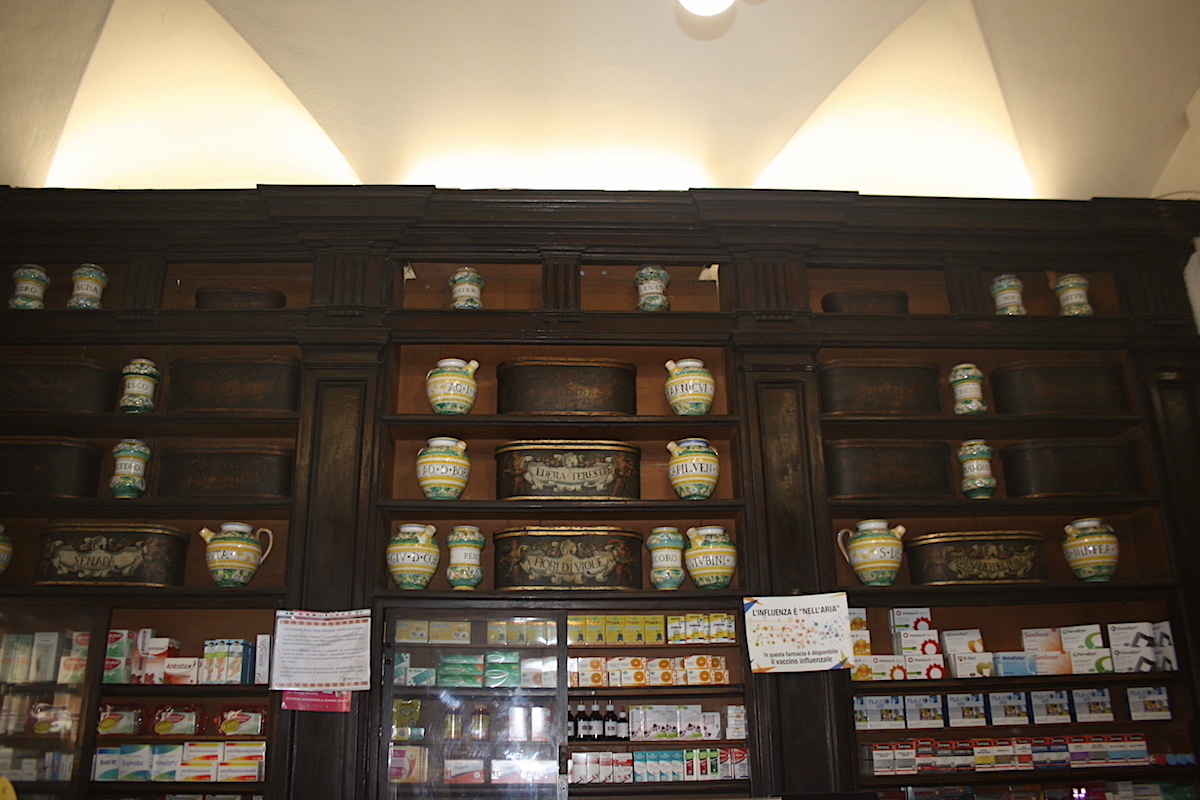
The several boxes made of sandalwood – recognized as an antiparasitic material and therefore excellent to preserve fresh and dried drugs – are displayed on the shelves.
They are a proof not only of the magnificent beauty of the antique drug containers, but also of the kind and variety of therapeutic products that this pharmacy has offered in Rome over the centuries, according to the inscriptions on the boxes describing what they contained.
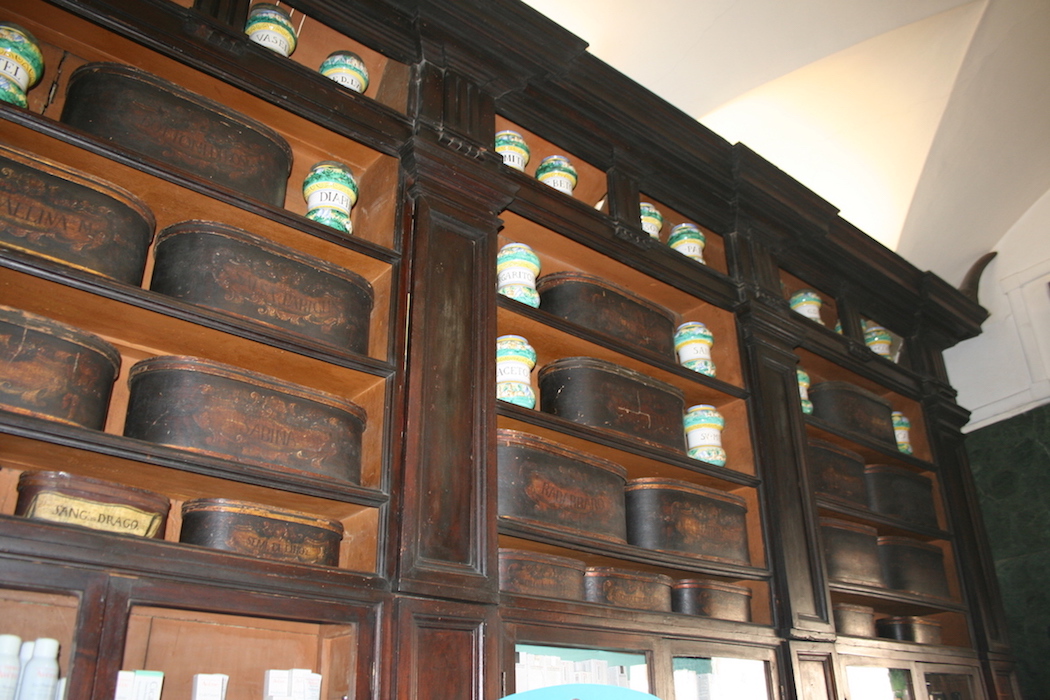
Some of them are very particular and characteristic, for example:
1- Sandalwood box painted with the writing “Edera Terrestre” (ground ivy).
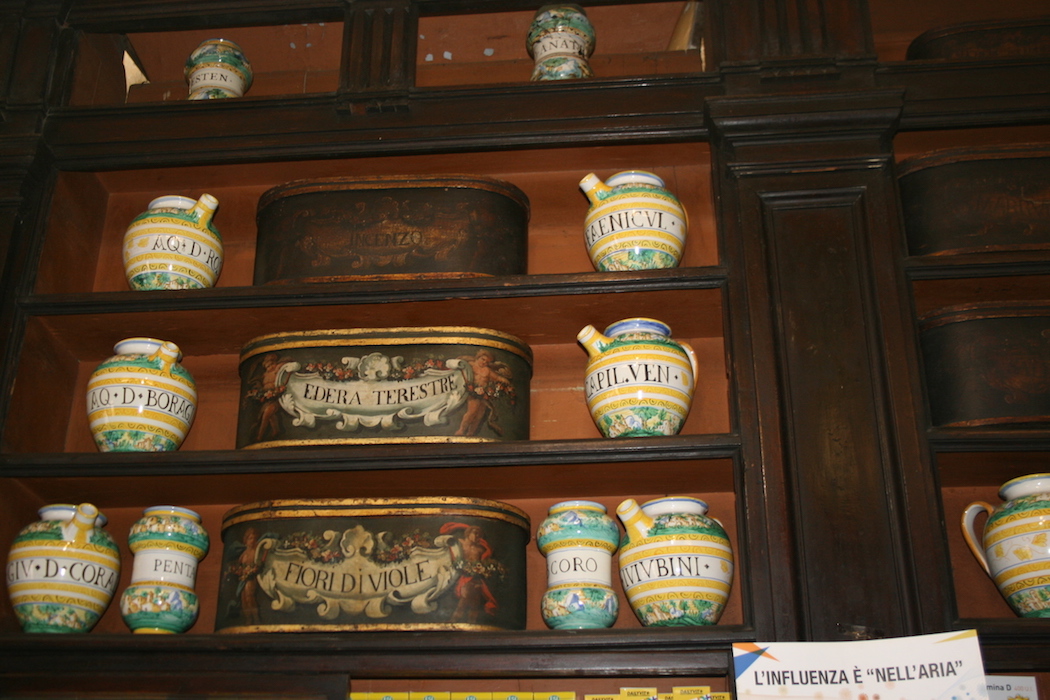
Among the uses of the ivy, whose leaves are impregnated with a bitter astringent, there is the treatment of ulcers and rickets in children. (↖)
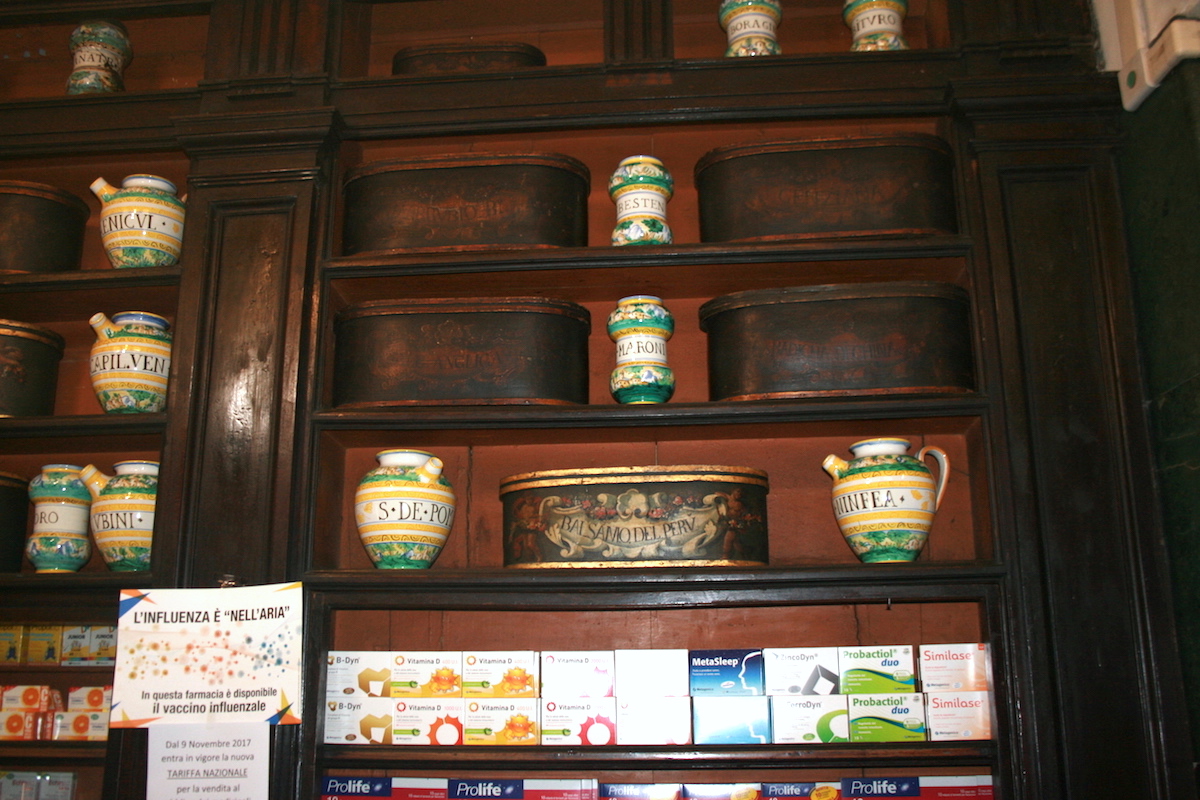
2- Sandalwood box painted with the writing “Balsamo del Perù“.
3- Sandalwood box painted with the writing “Sang di Drago” (dragon blood).
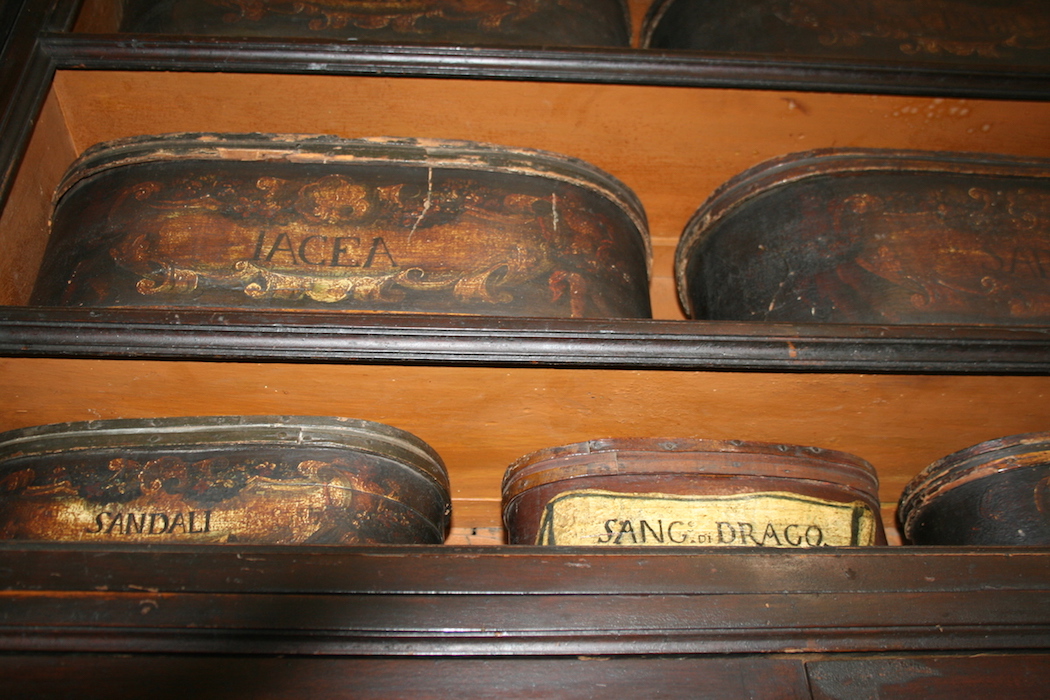
The dragon blood was a bright red rubbery resinous juice having a vanilla-like aromatic smell. It was recommended for treating bleeding, due to its astringent properties. (↖)4
On these shelves we can also observe some ceramic jars.
The main use of the pharmacy jars was to allow the apothecary to have different medicaments available any time and preserved in the best way. The different shape and material they were made of used to meet scientific and technical requirements more than aesthetic or artistic needs.
Just like the other equipment used by the apothecary, the ceramic jars had different functions according to the substance they had to contain; however they were used to preserve liquids and oily substances. One of the samples above mentioned cointained borage that nowadays is considered an excellent blood depurative and, presenting anti-inflammatory properties, it can also be used as an adjuvant in case of cough and cold.
- A very tall walnut cabinet on which there is an oil painting on canvas depicting the Holy Family, attributed to Andrea Sacchi.5
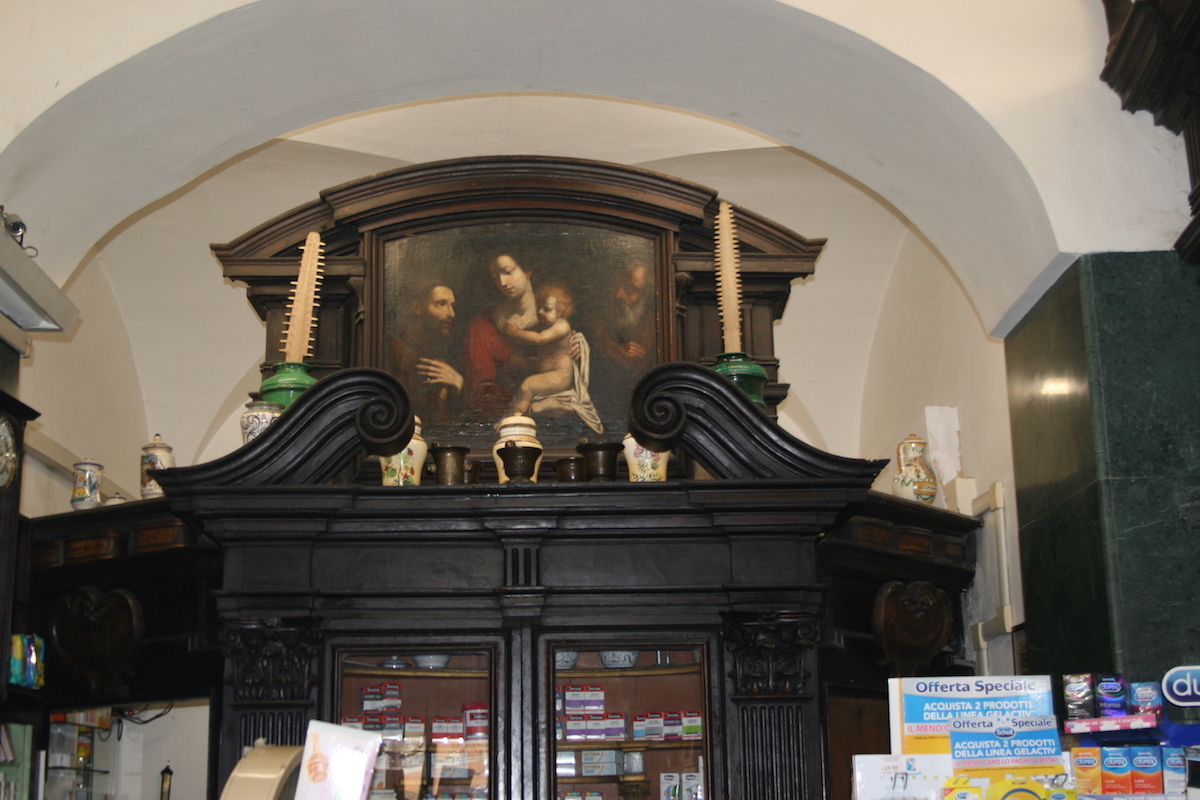
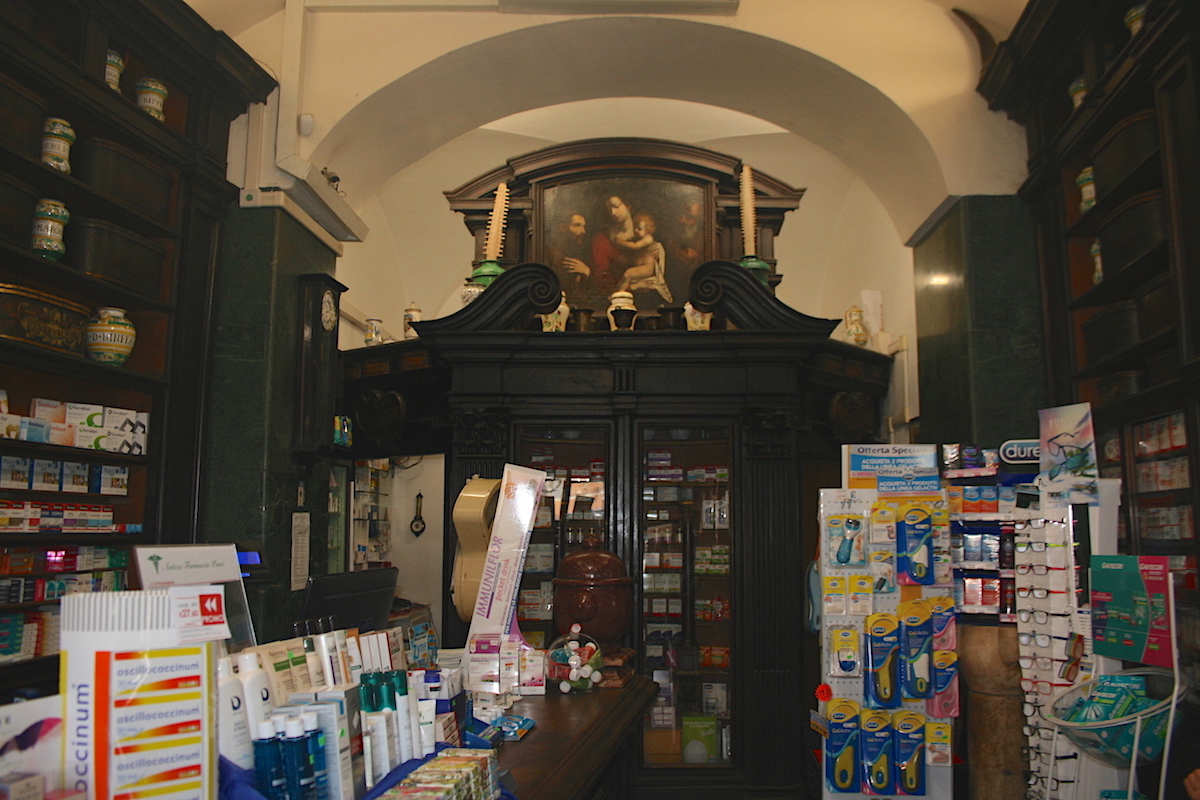
- The big counter.
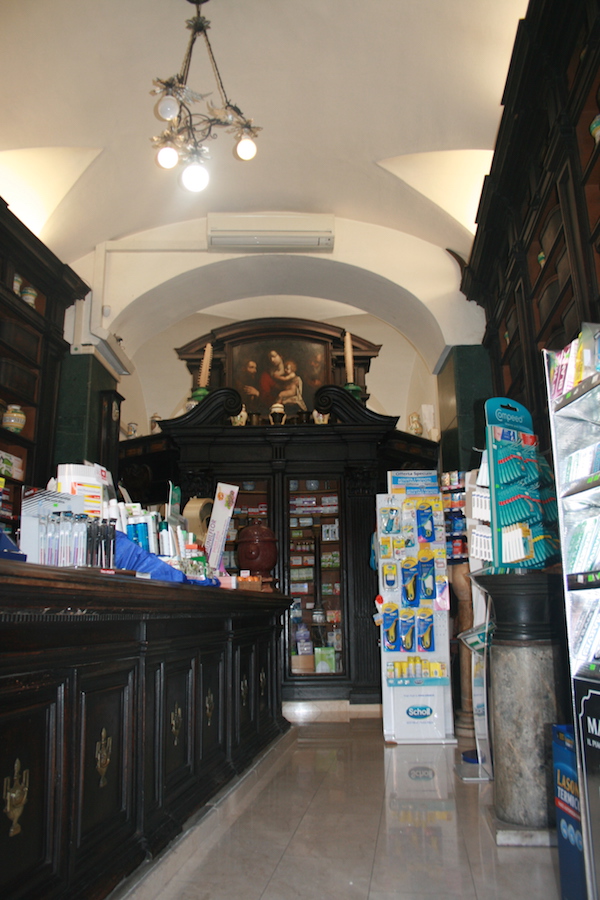
The counter and the cabinet behind. (↑)
And some other details of the counter:
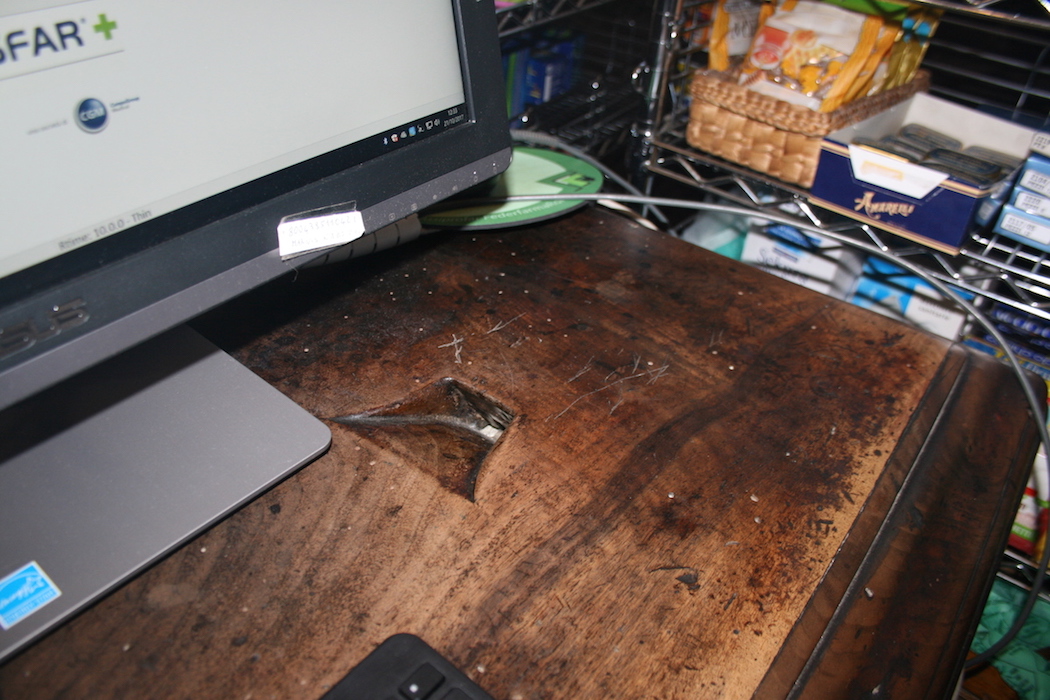
A slide, used to drop coins into a drawer underneath. (↑)
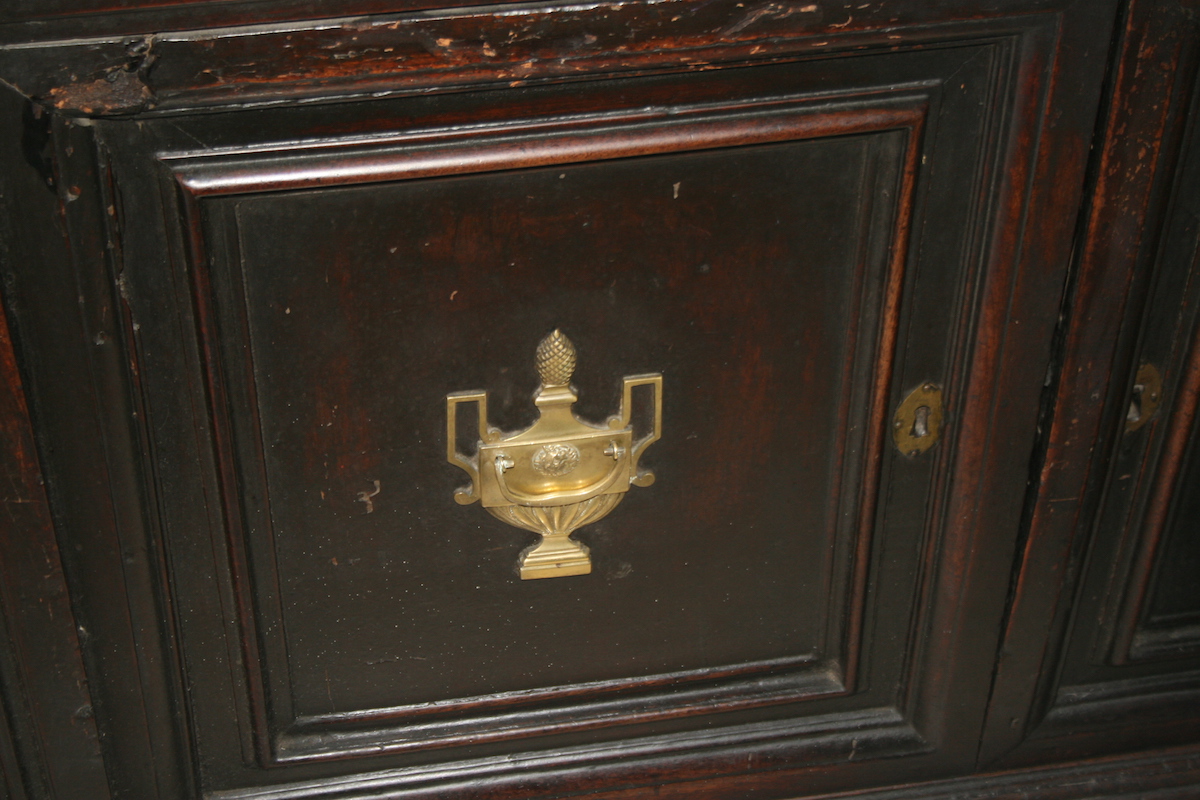
One of the brass handles on the front of the counter. (↑)
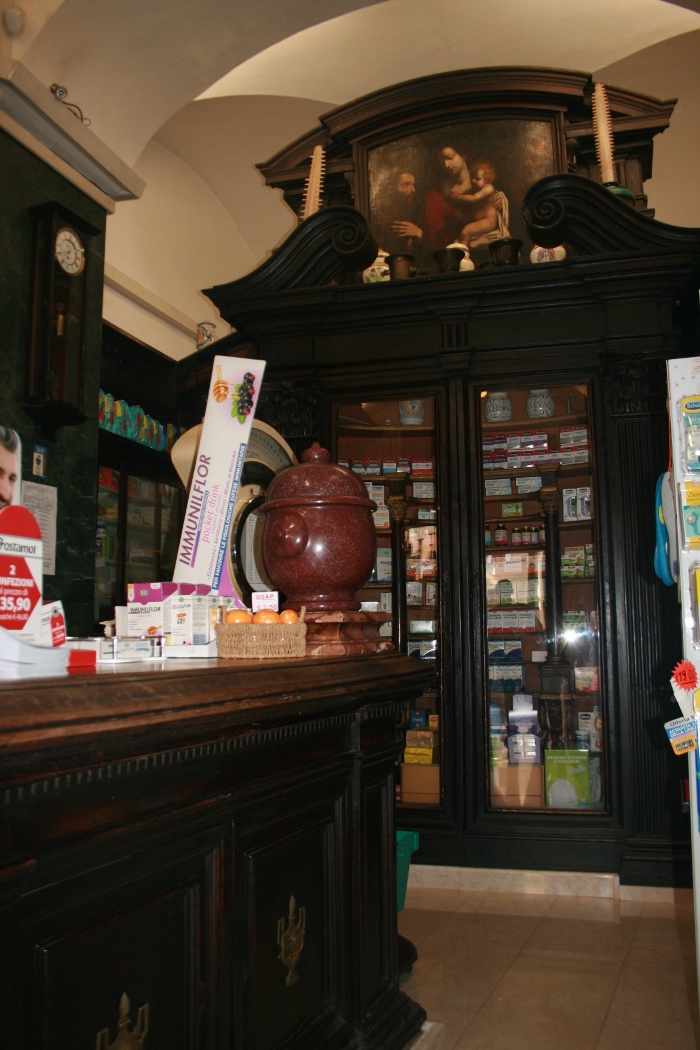
Porphyry pot located upon the counter. (↑)
In the laboratory of the pharmacy, they have been prepared for years:
- the theriac, a famous electuary (an ancient pharmaceutical preparation produced by mixing several medical substances with honey, sugar, syrup) conserved in a big stone container.6
- the Balm of Innocent, a medicament created upon request by Pope Innocent XI, which was widely used during the 17th century.
The furnishings and objects were a guarantee of professionalism and a proof of the important role that the apothecary had in the city of Rome. The furnishings of the Antica Farmacia Pesci have been acknowledged as items of national interest, recorded and classified, and are under the supervision of Monuments and Fine Arts Department of the Italian Ministry of Culture and Tourism.7
- Photos and main text by Asia Festa and Domenico Ioverno (November 2017)
- Locate the item on this Google Map
Bibliography
- Patrizia Costabile, “Antica Farmacia Pesci” in Erbe e speziali. I laboratori della salute, Aboca Museum Edizioni, Arezzo 2007, pp.267-271
- Alessandro Maviglia, Vecchie e nuove farmacie di Roma, Fe. Pro. Far., Roma 1966, pp.[30]
- Sandro Salvi, Antiche farmacie romane, Fratelli Palombi Editore, Roma 1988, pp.175
Related items