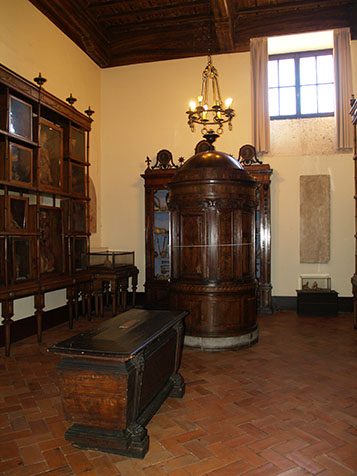
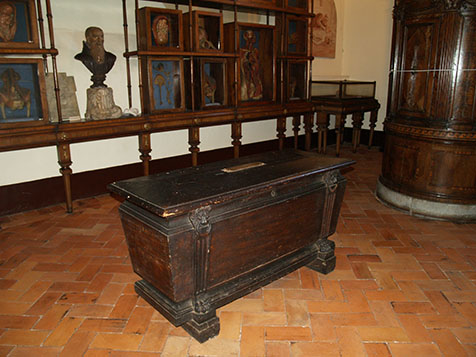
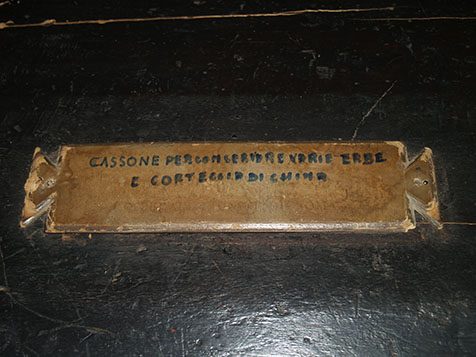
Cinchona bark’s wooden chest is located in the Museo Storico Nazionale dell’Arte Sanitaria (Rome, Lungotevere in Sassia, 3)
The cinchona tree’s medicinal uses were first discovered by the people of Peru and Bolivia.
China’s bark was used as a drug in the fight against malaria in the late eighteenth and mid-nineteenth century.
Indeed the name comes from the Countess of Chinchón who contracted Malaria and was able to recover thanks to this plant.
The bark was stripped from the tree, dried, and powdered for medicinal uses.
SITOGRAPHY
- Photos, main text and page layout by Martina Ceraudo and Federica Fichera (December 2015), courtesy of the “Museo Storico Nazionale dell’Arte Sanitaria”.
- locate the item on this Google Maps