According to a legend, one day a man arrived gravely ill at the Asclepieion of Pergamon, near modern day Bergama. He was feverish, trembling, and near death. The Asklepiad priests washed him, covered him with oil, and dressed him in white robes before placing him in the sleeping/incubation rooms for incubation. But the man worsened, it became clear he had been poisoned.
When Claudius Galen examined him, he recognized that there was little hope. He ordered the man to be carried outside the temple gate so his family could bid farewell. As the dying man lay beneath the trees near the entrance, he saw two serpents fighting over a bowl of milk left nearby. In their struggle, the snakes vomited their venom into the milk and ran away.
Desperate and delirious, the man crawled to the bowl, drank the poisoned milk, and immediately fell into a deep sleep. Hours later, when his sons returned to retrieve what they believed was his body, they found him alive; his color restored, his breathing steady. When word reached Galen, he realized that the venom had transformed the milk into a natural antidote.
In gratitude for this revelation, Galen commissioned a column at the entrance of the Asclepieion. Upon it he had carved two serpents around a bowl, regurgitating into it, the very image of this miracle. The serpent, ever since, has remained the most important emblem of medicine. Poison and antidote, two sides of nature’s balance.
For the serpent was not a god but a metaphor, a living embodiment of the physician’s art: to transform what harms into what heals, to find in nature’s venom the cure for man’s suffering.
Galen, is described as turning with renewed focus to the study of local herbs, seeking practical ways to counteract poison. While it cannot be stated with certainty which plants he used, some traditions suggest that traditional herbs such as garlic may have played a role in these early treatments.
- Check the myth about it: Garlic Myth
A copy of the column is now preserved at the archeological site (see next image), while the original one is preserved in the Archeological Museum of Bergama (see the second next photo).
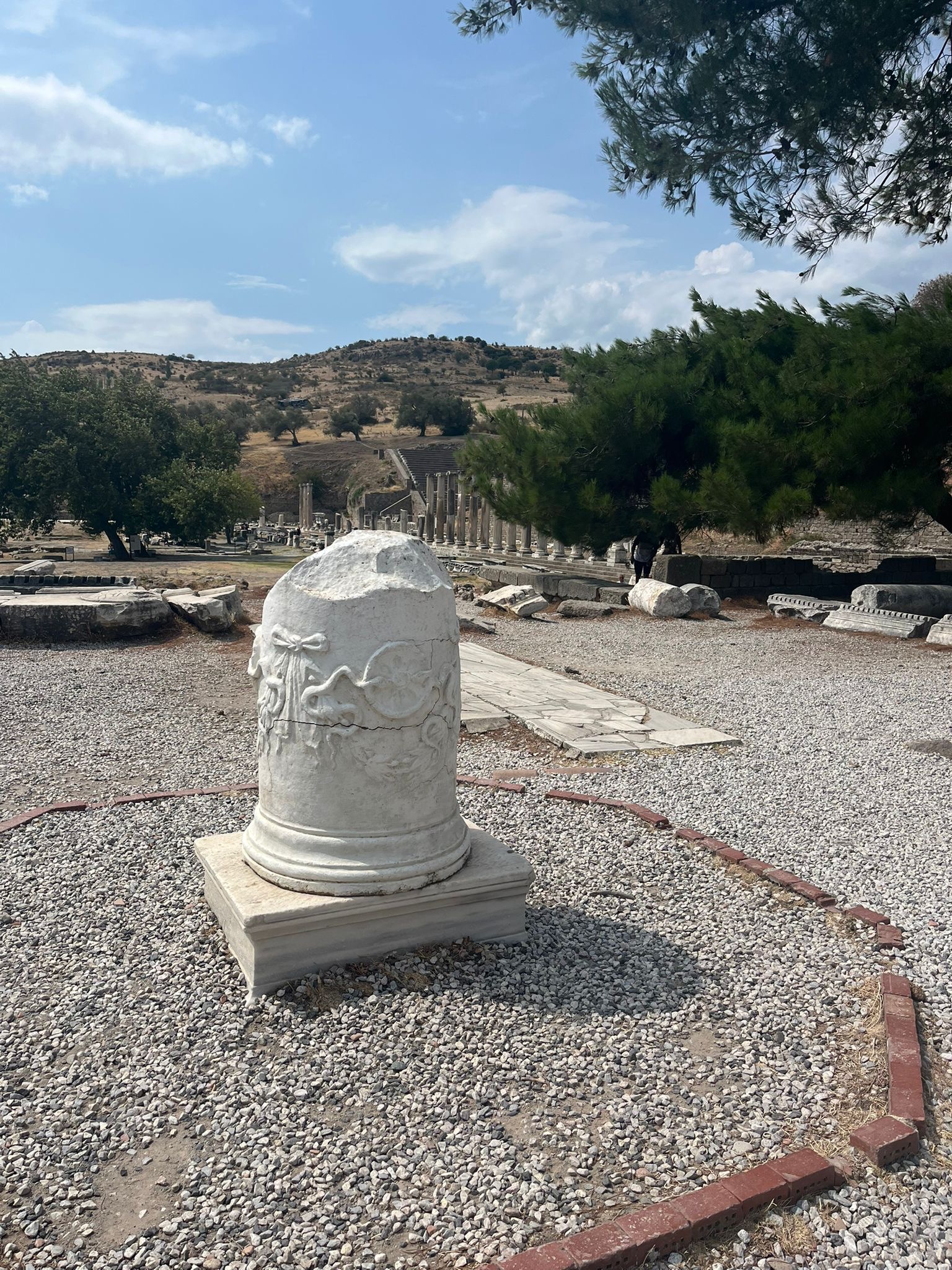
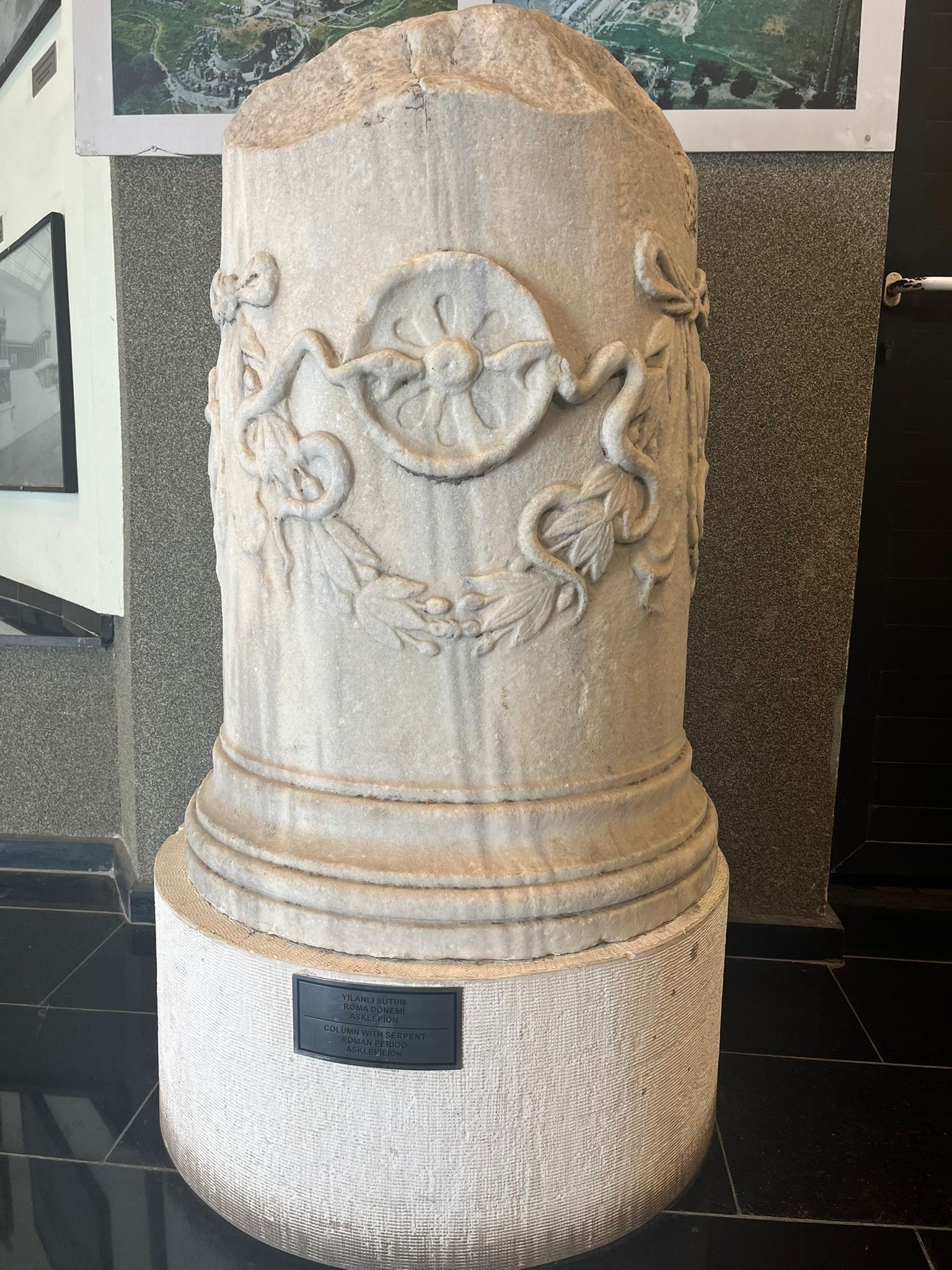
- Photos by Efe Erhan Küsmez (August 2025)
- Locate the archeological site column on this Google Map and the one in the Museum on this Google Map
Sources
– On-site information panels and museum information displays at the archeological site and Archeological Museum of Bergama.