Stained glass windows in the Saint Dymphna’s Church in Geel depicting episodes from the life of the saint, works of 1896 by Jean-Baptiste Anthony (1854-1930).
In particular:
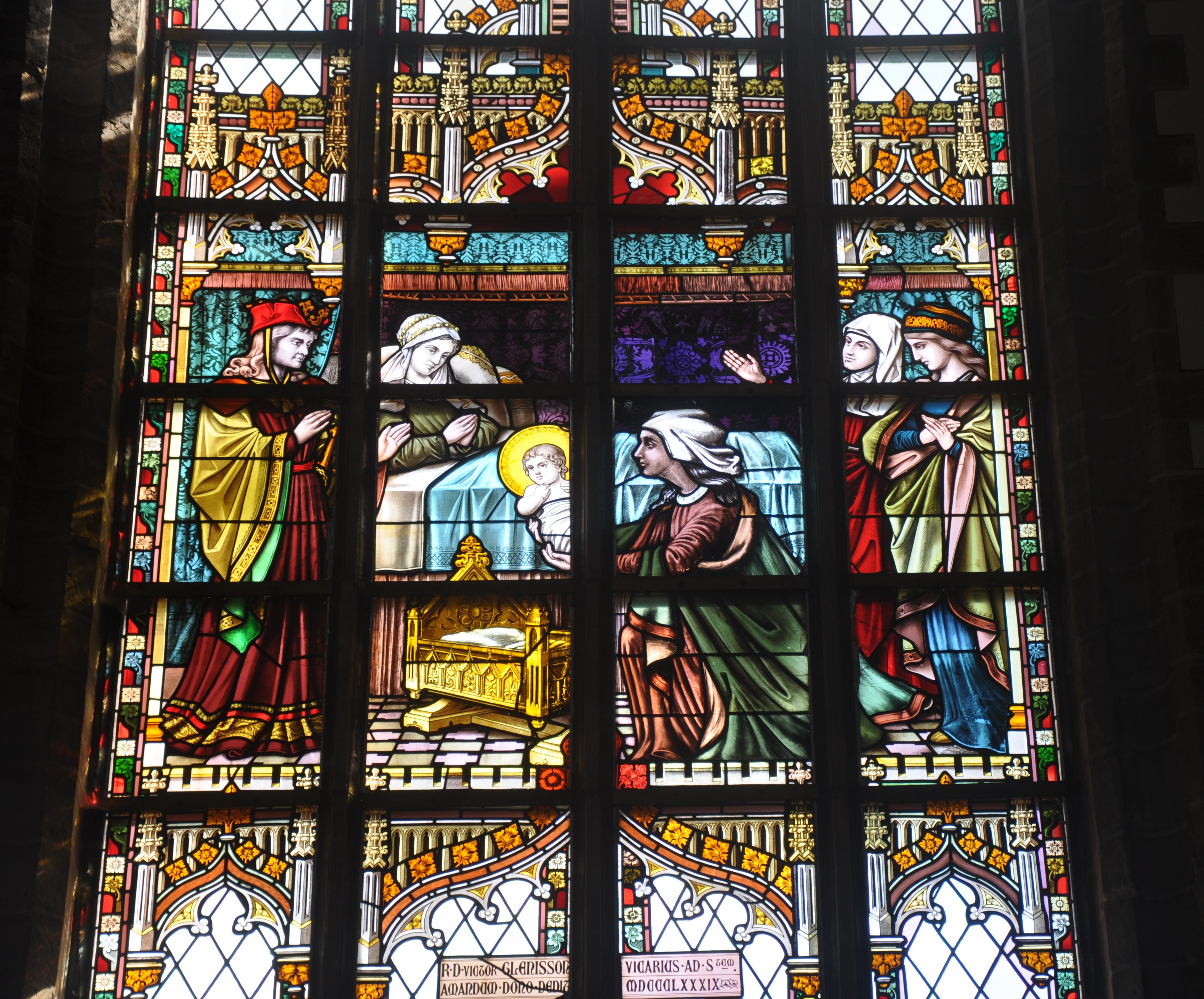
Birth of Dymphna, already surrounded by the halo, which symbolize the holiness (another picture: http://balat.kikirpa.be/photo.php?path=X001217&objnr=146387&nr=123).
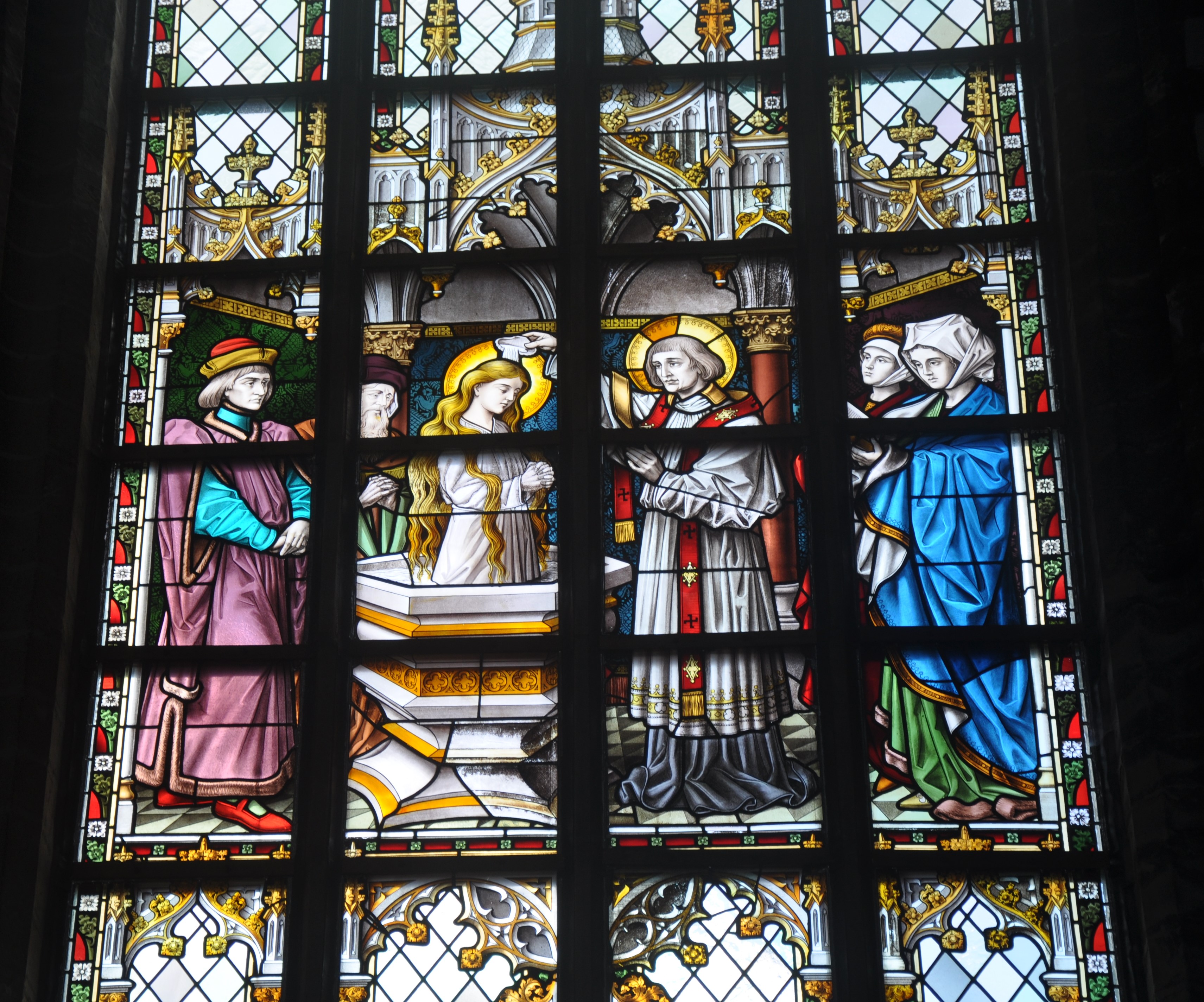
Baptism of Dymphna at the hands of Gerebernus (another picture: http://balat.kikirpa.be/photo.php?path=X001218&objnr=146388&nr=124).
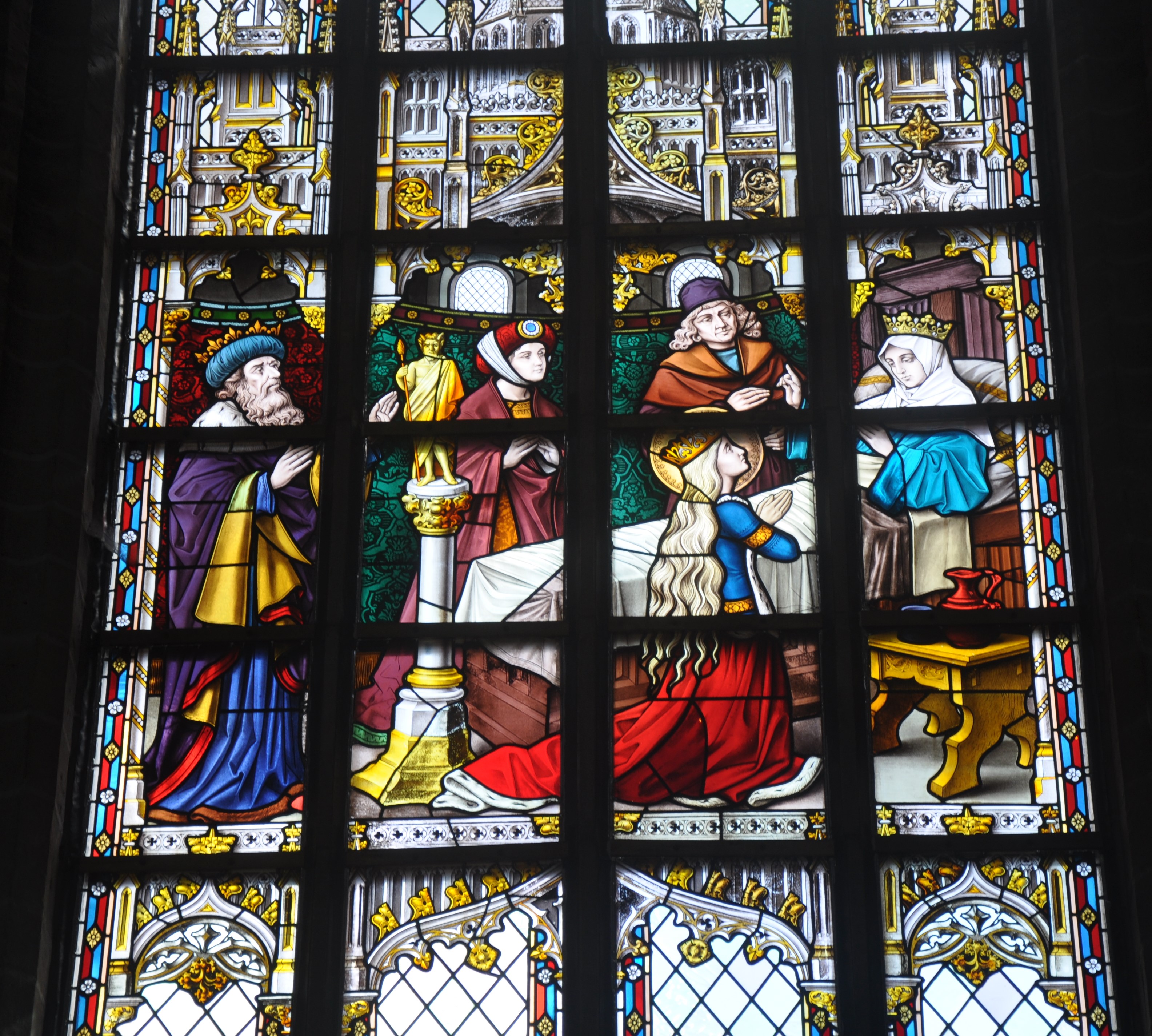
Dymphna at the foot of the bed of the dying mother (another picture: http://balat.kikirpa.be/photo.php?path=X001219&objnr=146389&nr=125).
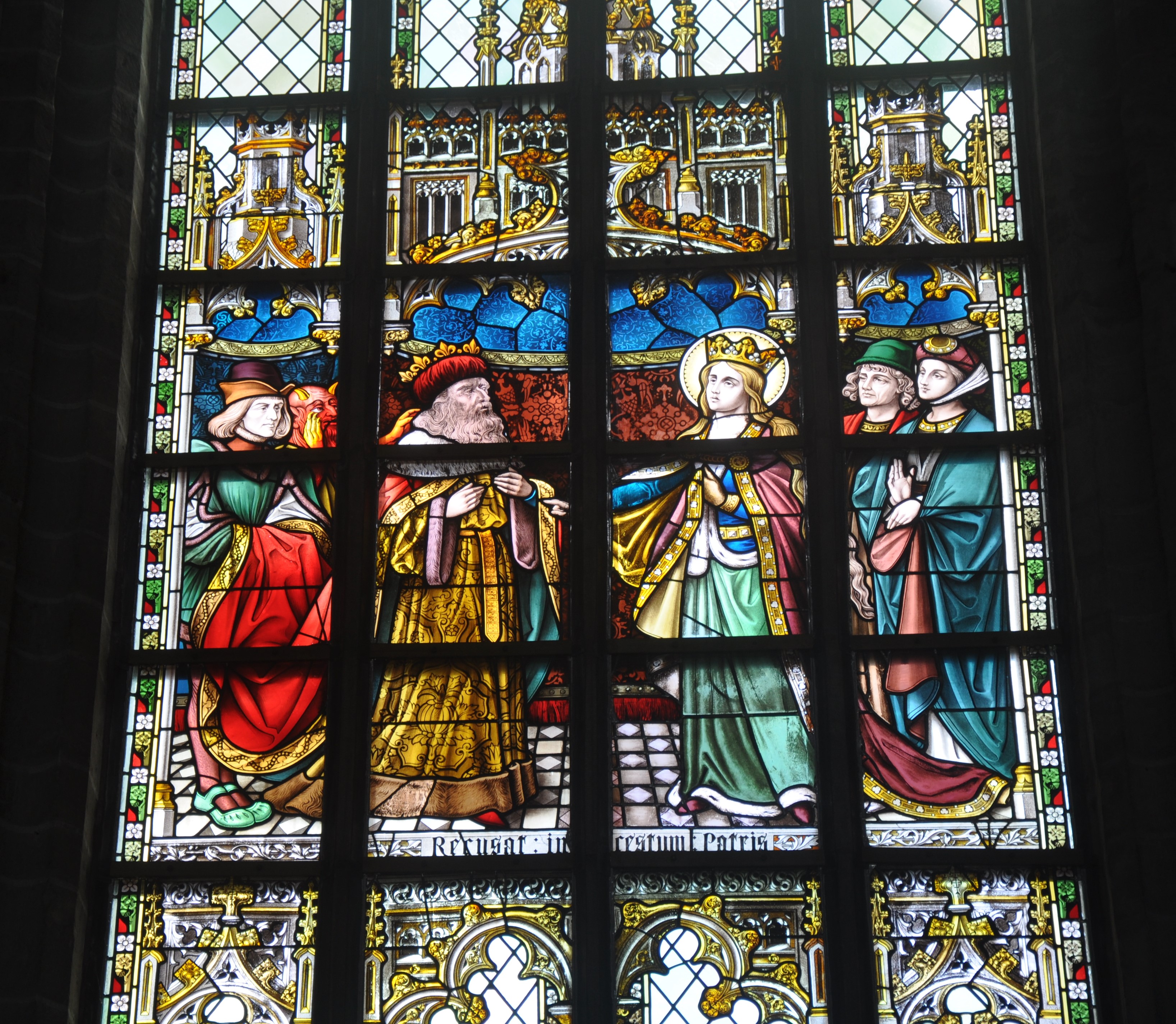
The king, with the devil as counselor, exhibits the intention to marry his daughter Dymphna (another picture: http://balat.kikirpa.be/photo.php?path=X001220&objnr=146390&nr=126).
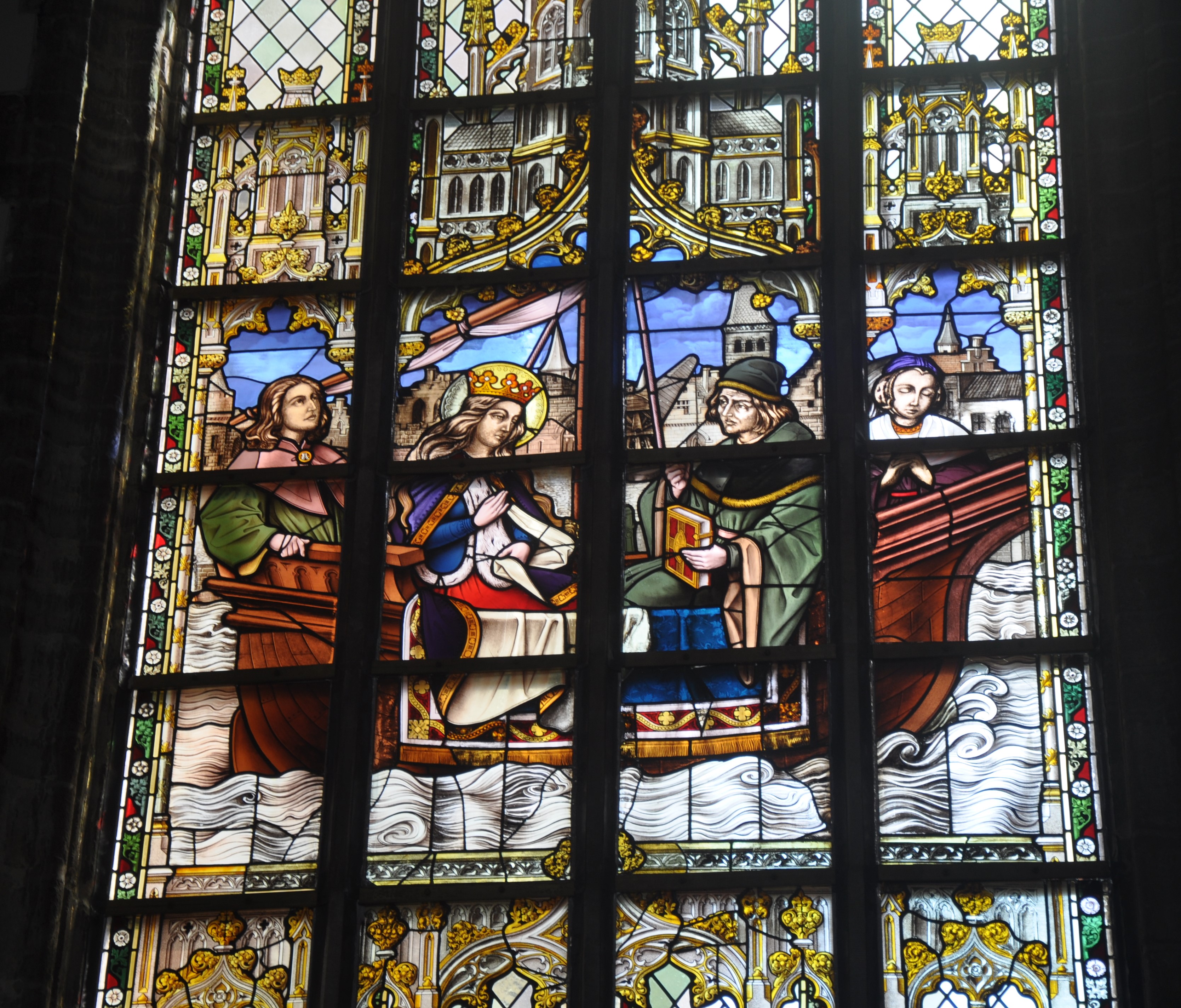
Dymphna flees by sea in order to run away from incestuous desires of her father with Gerebernus, the jester and his wife (another picture: http://balat.kikirpa.be/photo.php?path=X001221&objnr=146391&nr=127).
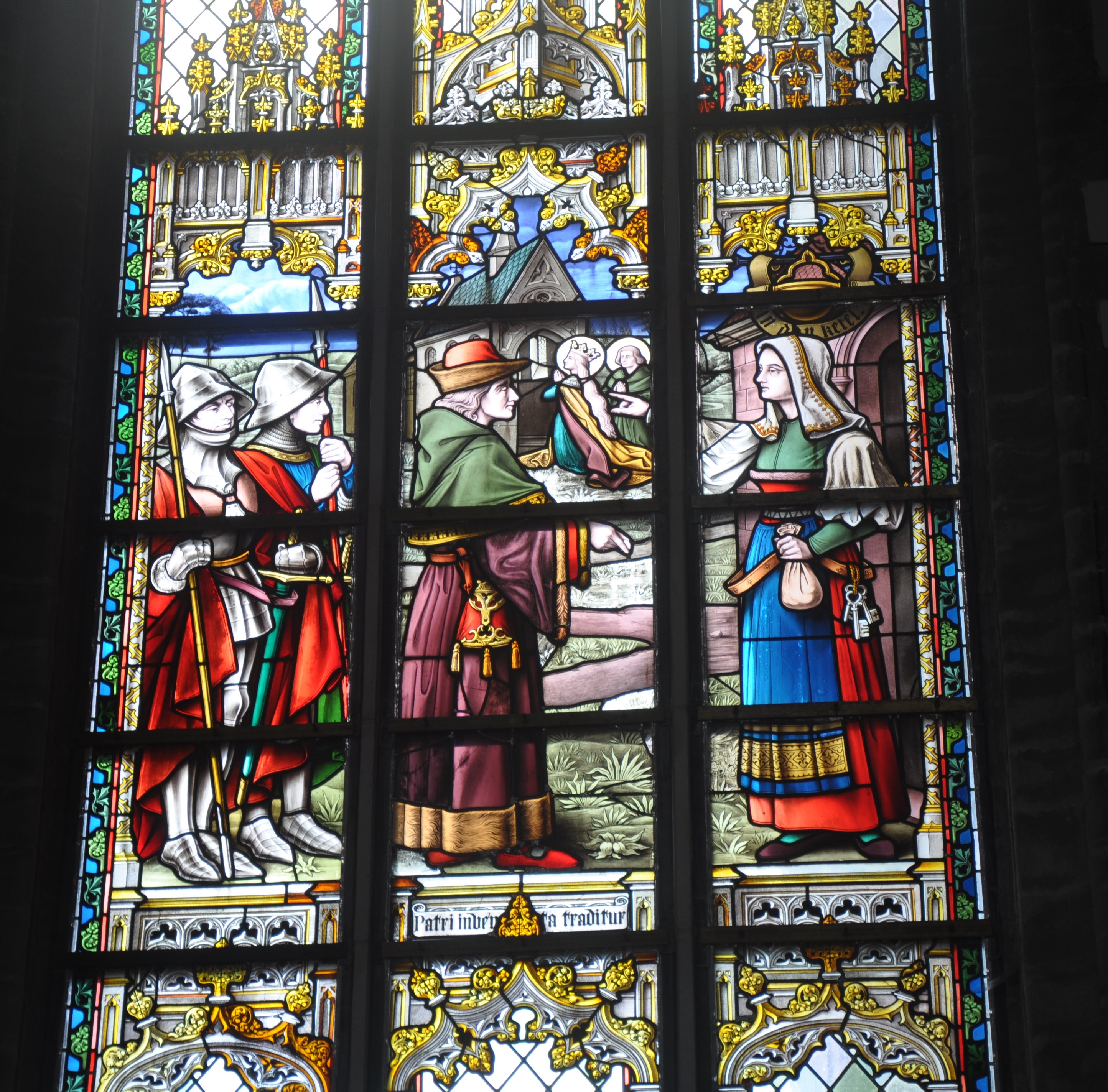
Some soldiers of the king, arrived in Geel, are informed by a woman where Dymphna has fled. The woman holds a bag of money, that is the reason why the soldiers realize that Dymphna is nearby. In the background, Dymphna and Gerebernus dedicate themselves to the life of prayer (another picture: http://balat.kikirpa.be/photo.php?path=X001213&objnr=146392&nr=128).
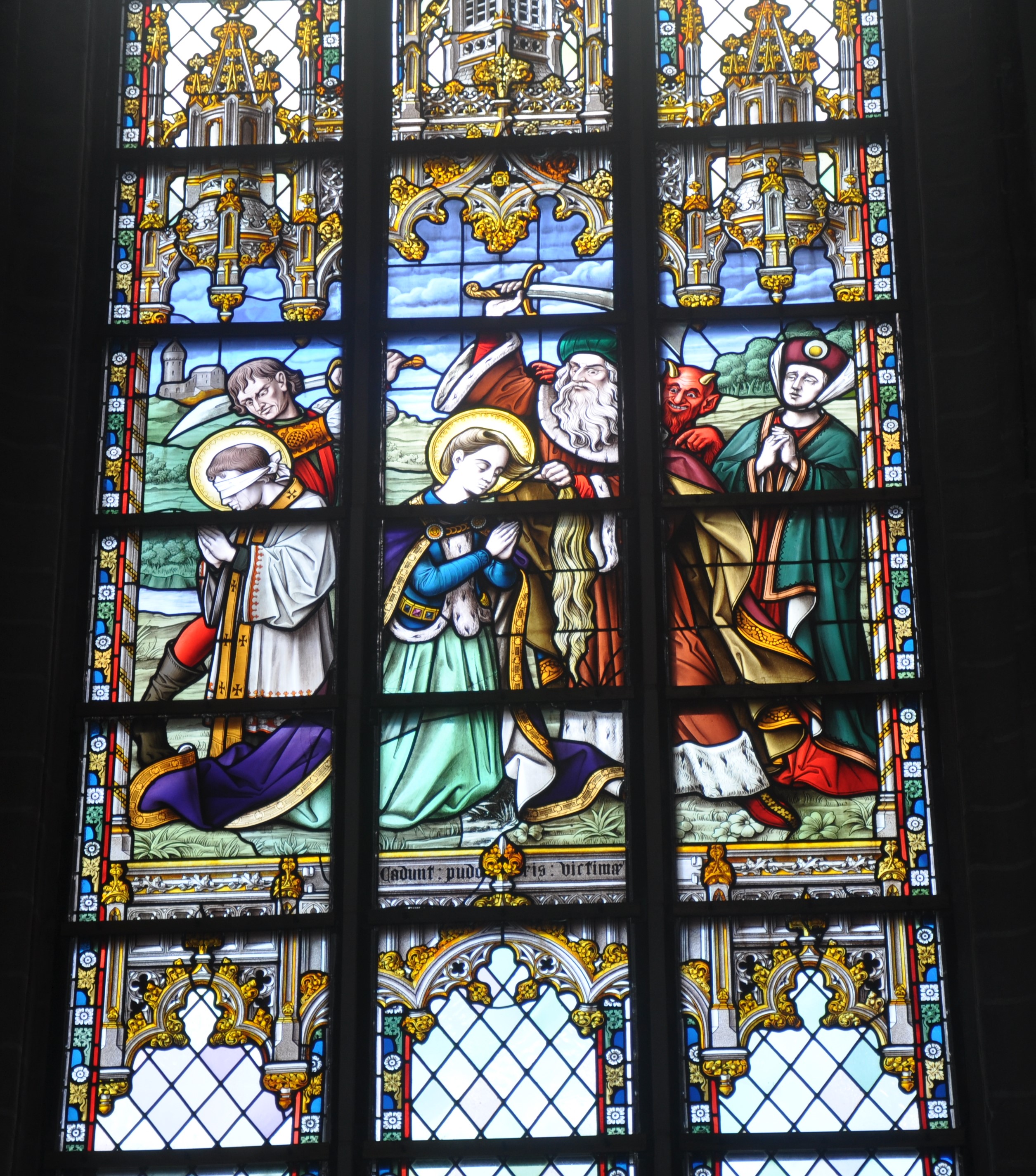
The king, guided by the devil, decapitates Dymphna, meanwhile his men decapitate Gerebernus (another picture: http://balat.kikirpa.be/photo.php?path=X001214&objnr=146393&nr=129).
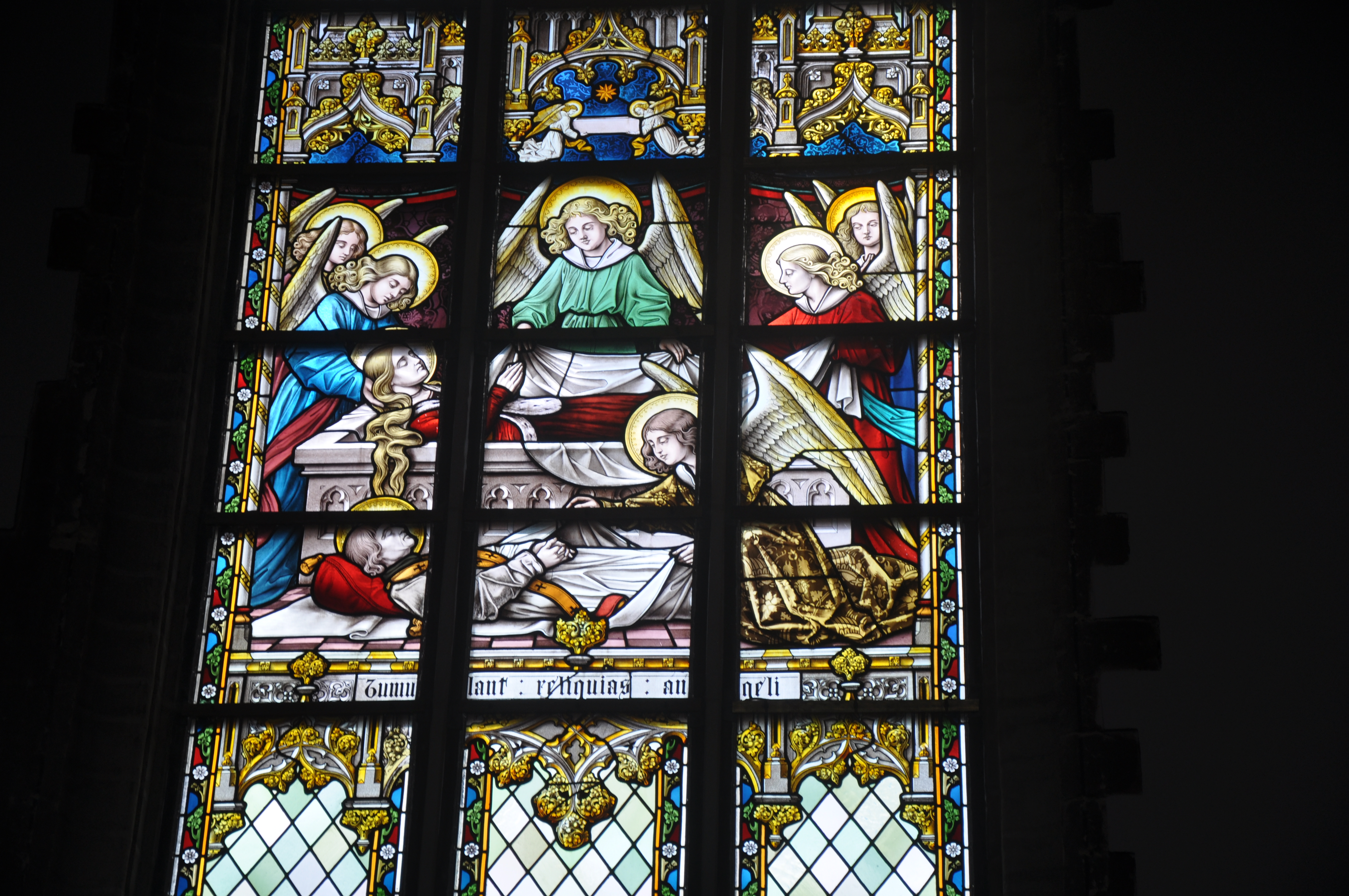
The angels lay down Dymphna and Gerebernus in the sarcophagi (another picture: http://balat.kikirpa.be/photo.php?path=X001215&objnr=146394&nr=130).
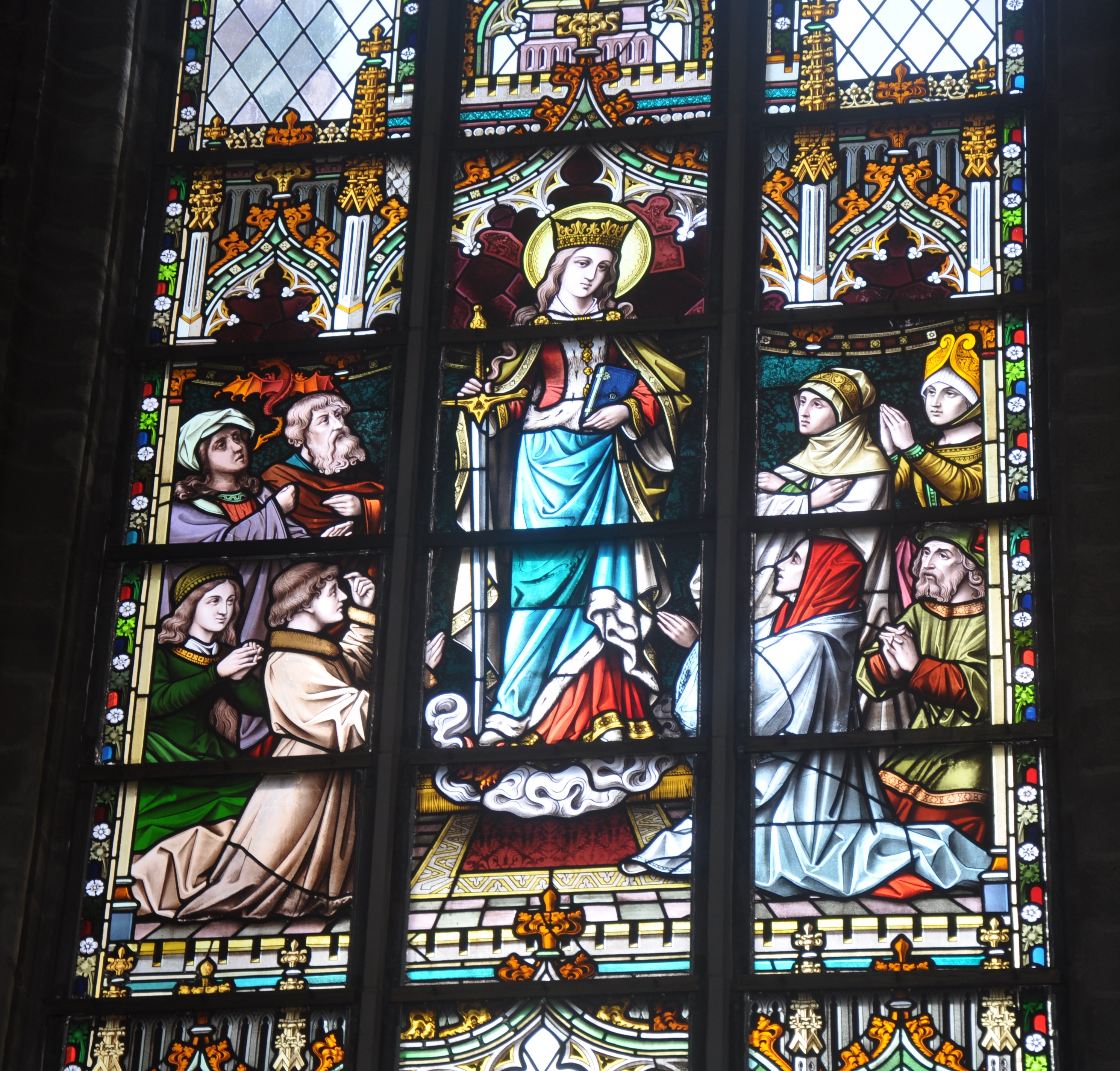
After death, Dymphna shines in her holiness. Here the saint is illustrated with some of her iconographic features: equipped with a sword, with a book in the hand (believed symbol of wisdom and reason which was able to bring again to patients) and a crown on her head (another picture: http://balat.kikirpa.be/photo.php?path=X001216&objnr=73514&nr=122).
- Page layout and text by Jessica Casaccia (December 2020)
- Locate the item on this Google Map