Over the last few centuries many human bodies have been preserved and conserved for medical and teaching purposes.
The Body Collected presents a large selection of specimens showing the evolution of research from the 18th century to now. The oldest samples come from private collections of body parts such as bones and fetuses. The aim of the exhibition was to describe and underline the difference in the way diseases and anatomy was taken perceived, also thanks to the technological advances.1
The exhibition, held at the Medicinsk Museion, in Copenhagen, defines the evolution of the approach of medicine to the human body.
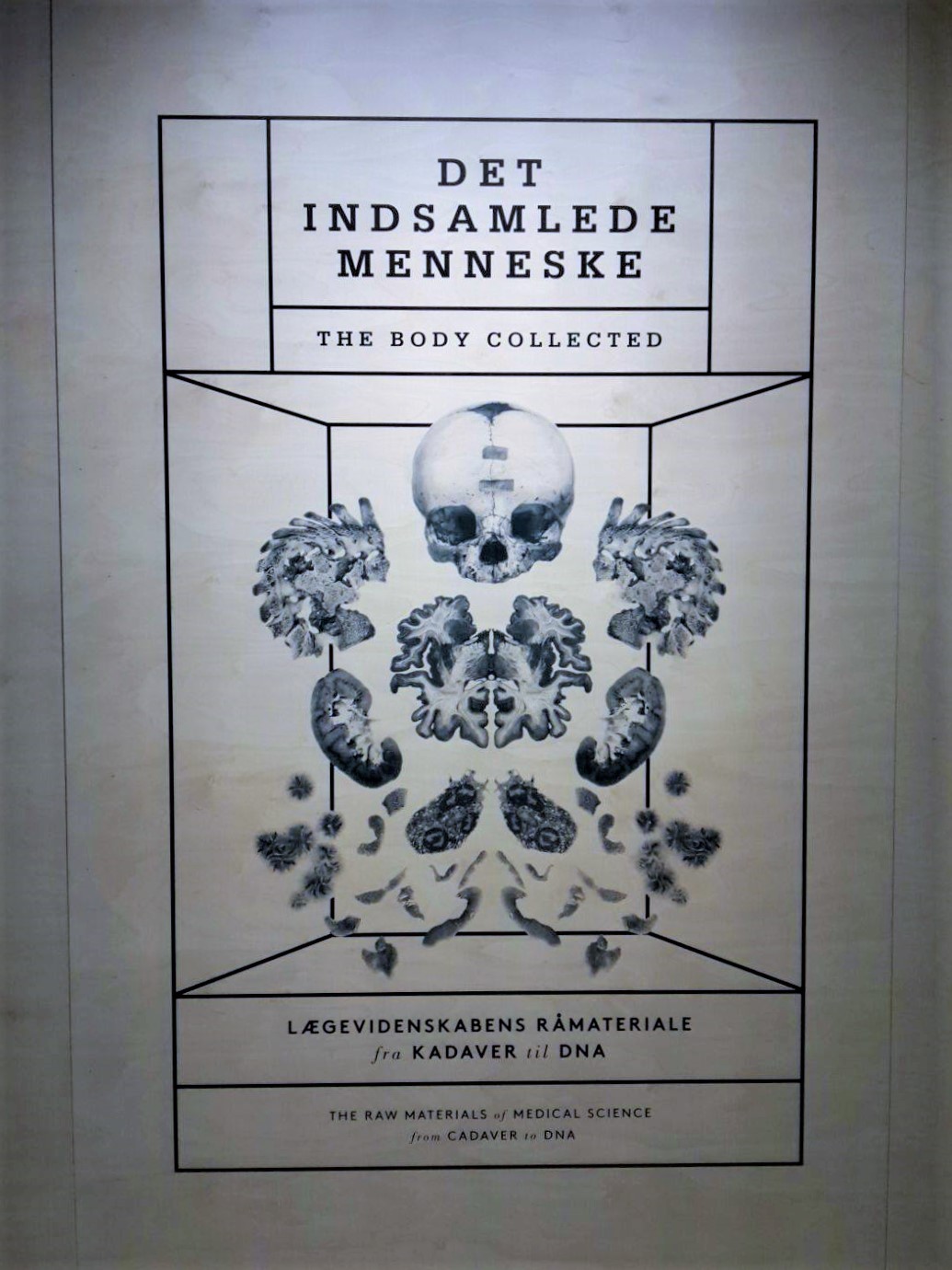
- Some items inside The Body Collected
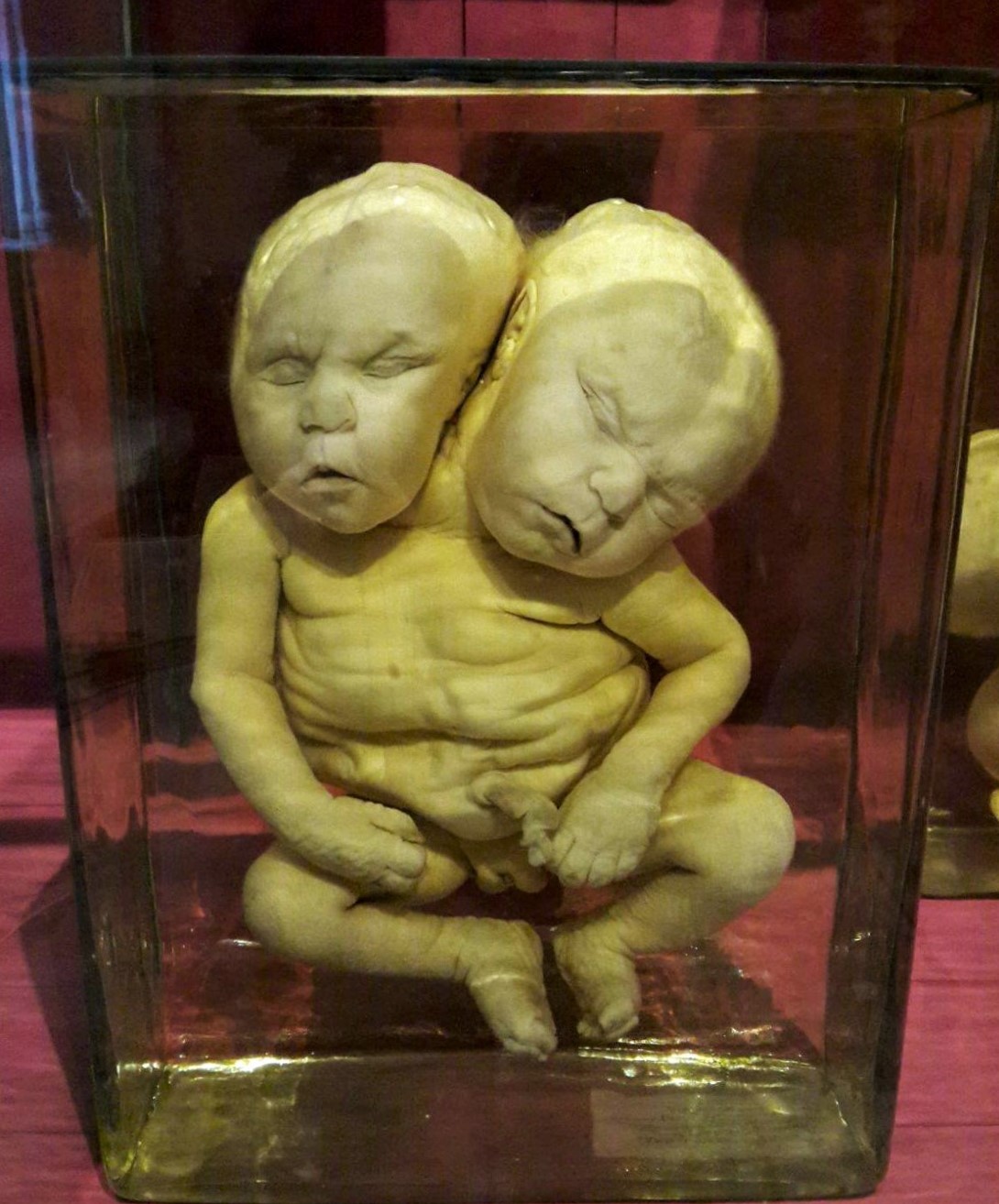
Twins with two heads.jpg, two arms and shared body (dicephalus dibrachius)
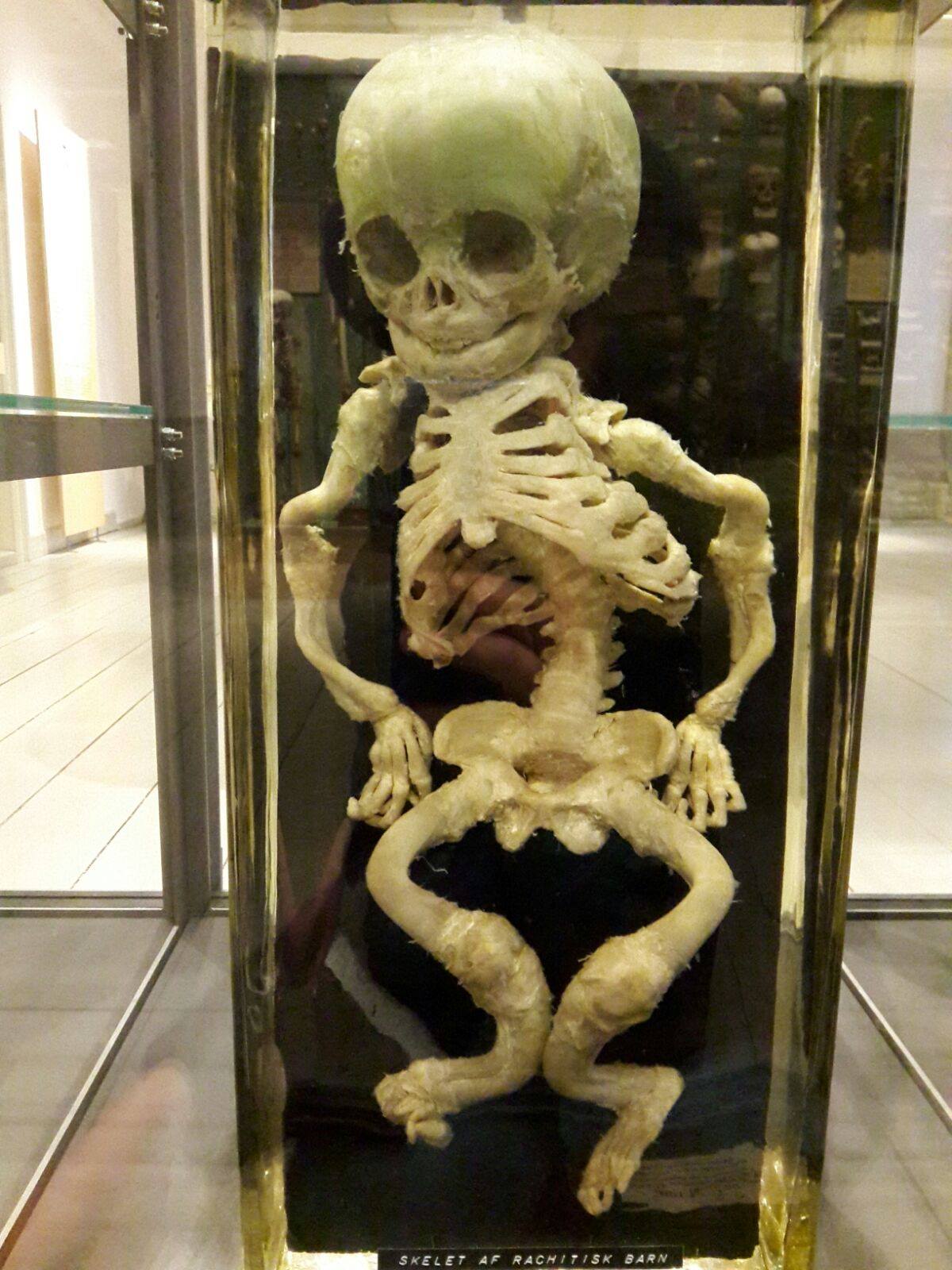
Skeleton of a rachitic child.jpg
Brain.jpg with bullet hole
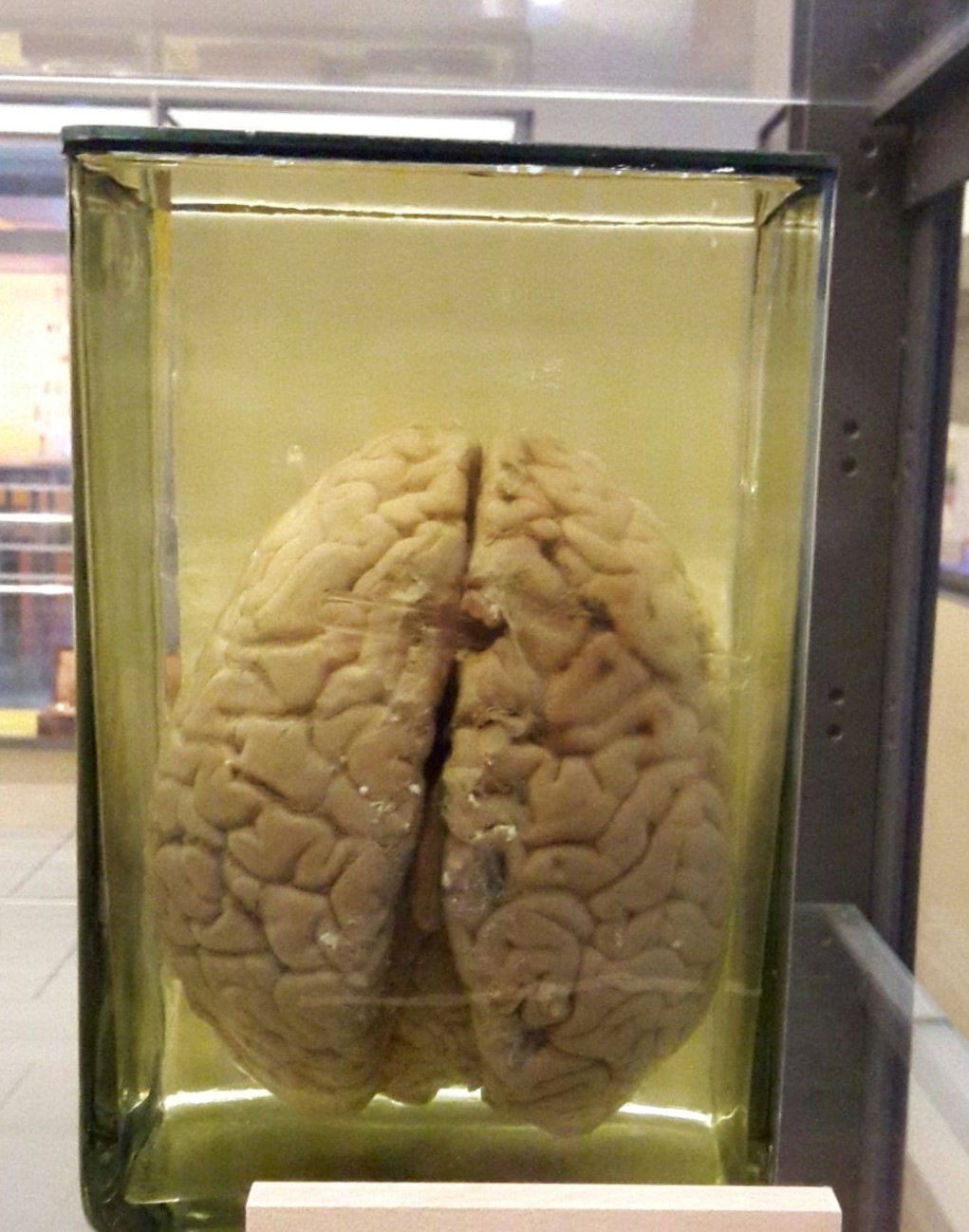
The trajectory of this brain is marked by a glass tube.
Dried skin preparation of Martha and Marie.jpg
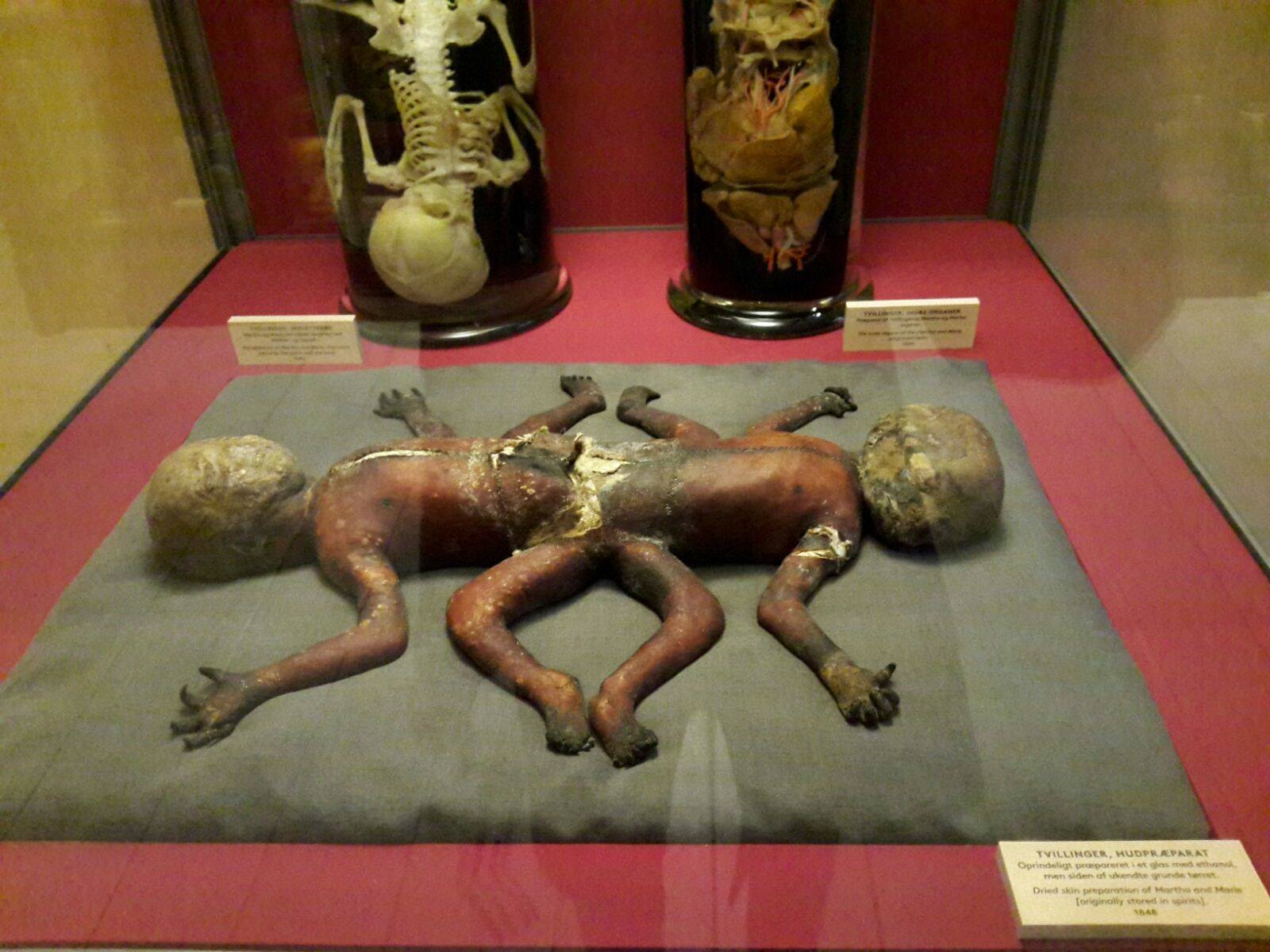
In 1848 a pair of conjoined twins were born in Copenhaghen. Three specimens were made from their bodies: their skeletons, their organs and a taxidermy of their skin to preserve their physical form.2.
Foetus with sirenomelia
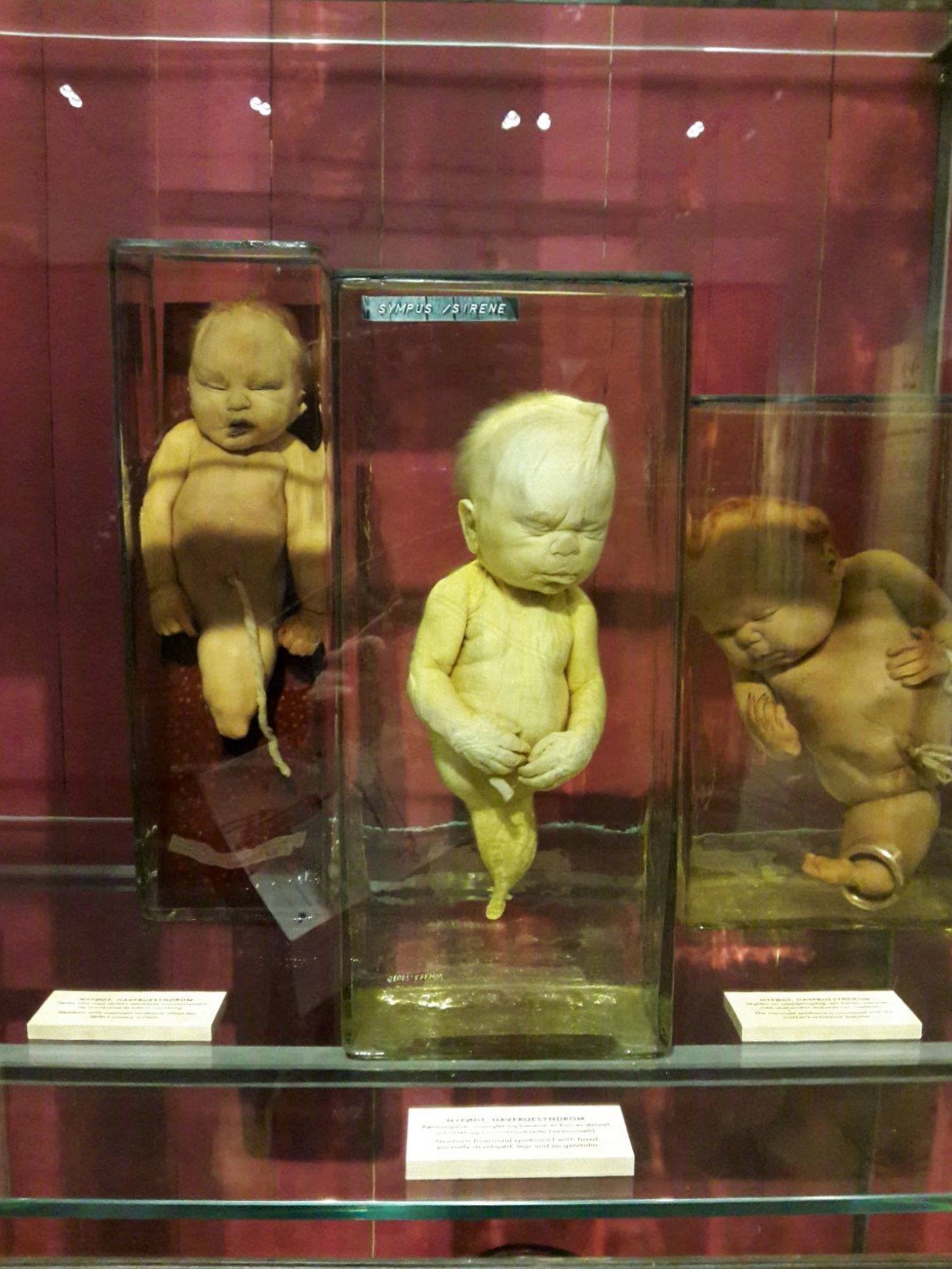
Mermaid Syndrome (or sirenomelia) is a congenital abnormality where the legs have grown together to resamble a mermaid’s tail3.
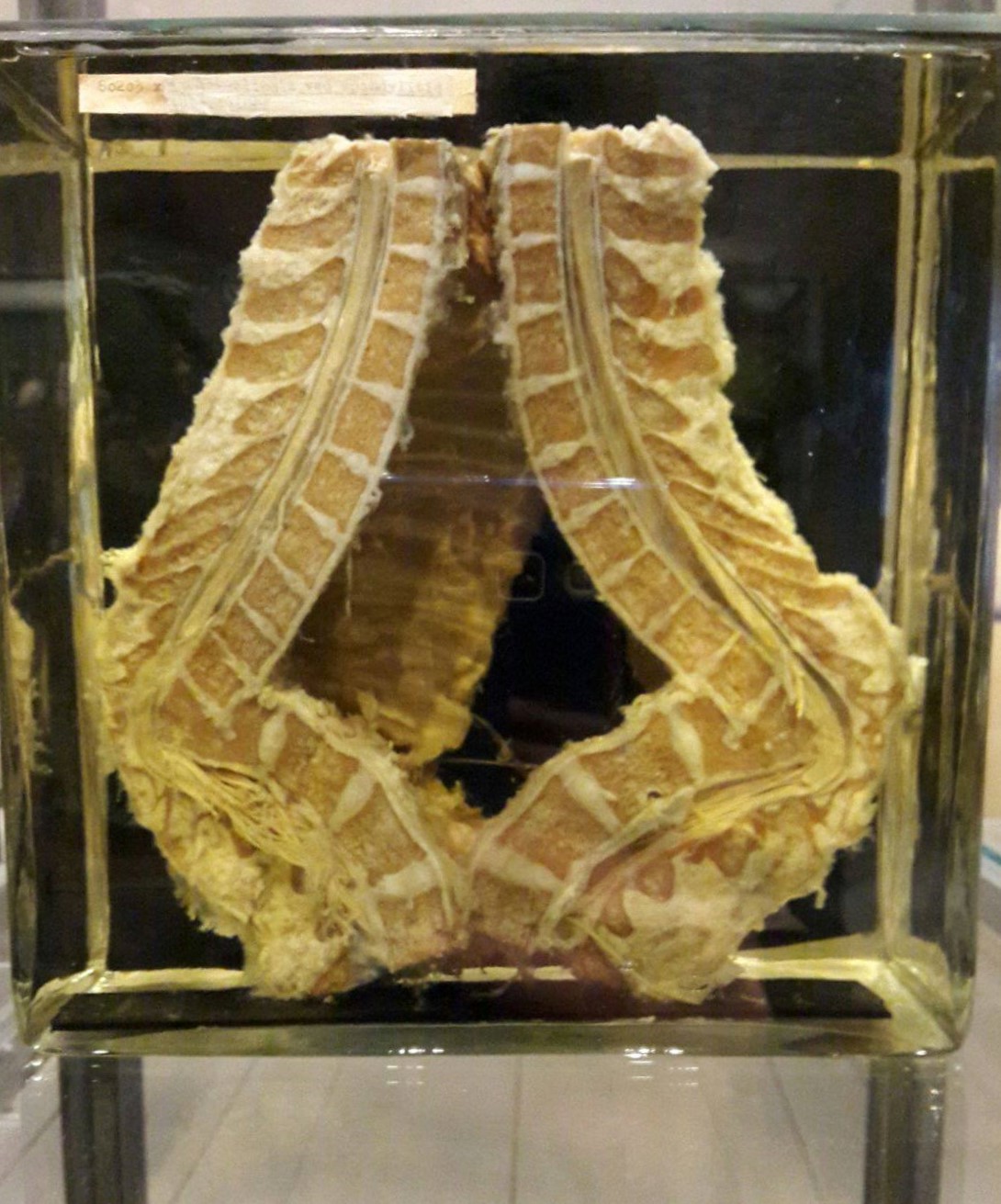
Spine.jpg with forward curvature as a result of tuberculosis
A hand without skin and connective tissues.
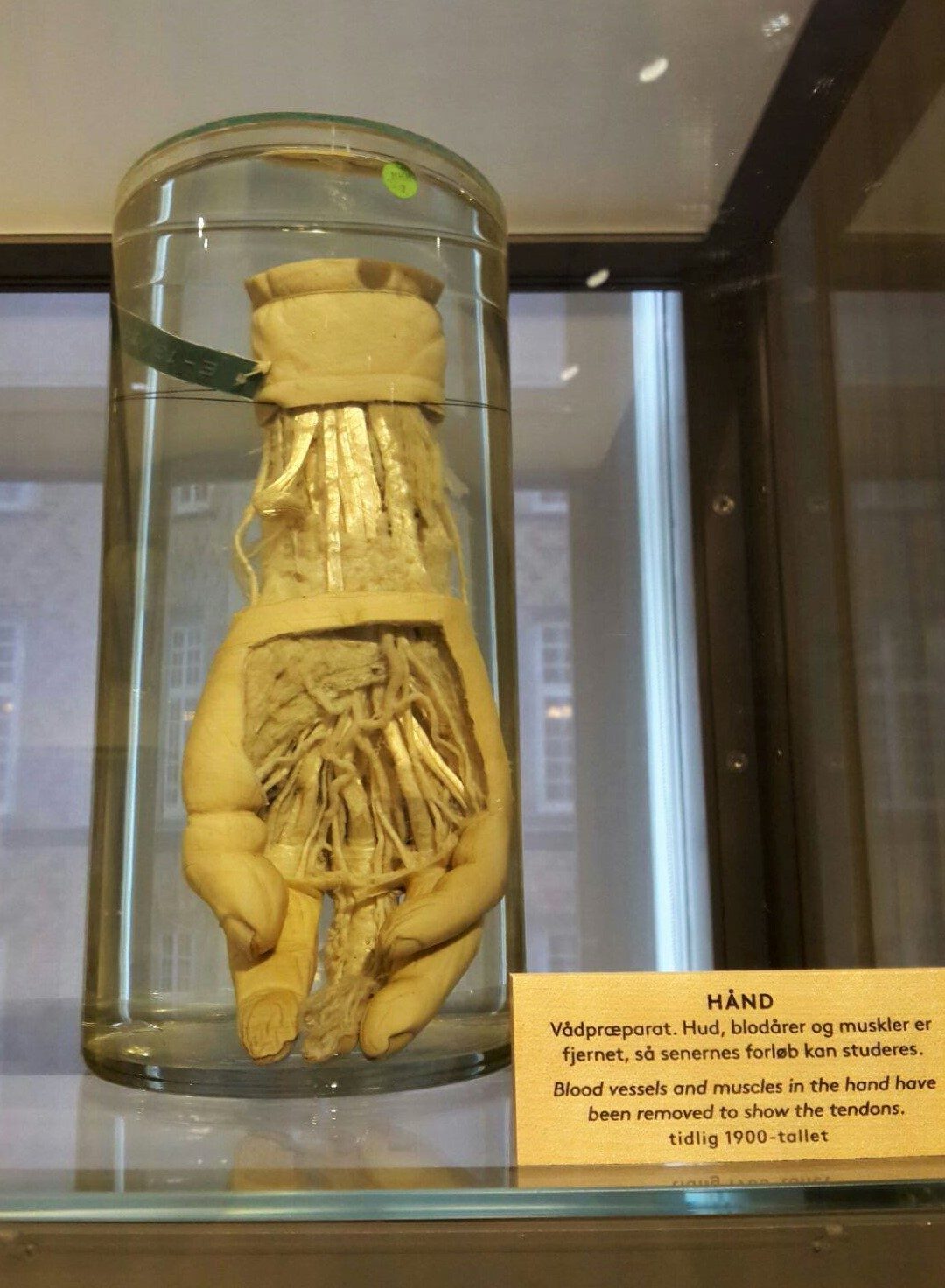
In this hand tendons can be studied clearly.
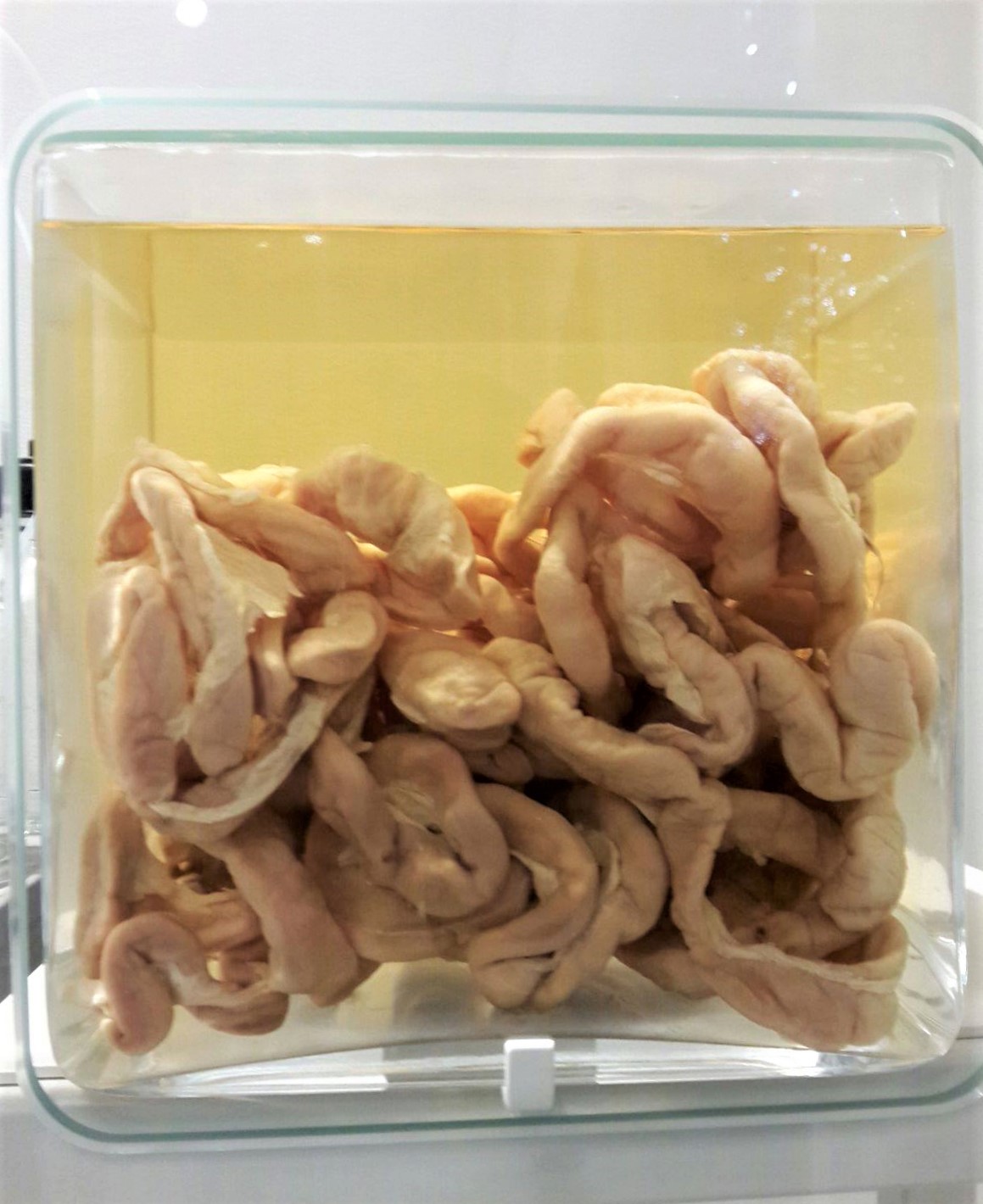
Original human intestines.jpg and intestinal system specimen preserved in formalin jar
More informations on the Medical Museion’s official website – The Body Collected.
- Photos and main text by Ilaria Randazzo (January 2017)
- Locate the item on this Google Map