This Volume Displacement Body Plethysmograph also called “Body Box” is preserved in the Warren Anatomical Museum, in Boston.This experimental device was created between 1960 and 1980 at the Harvard T. H. Chan School of Public Health and was used to measure lung volumes, airway function, and rapid breathing events in human subjects. A person sat inside the box with his head in the glass dome on top and breathed into the tube connected to the outside. This plethysmograph was made of wood and “L” shaped, designed to fit around a seated human.1
In 1968 it was used to record the breathing patterns of a singer, it measured long volume changes, subglottic pressures and airflow rates. These reults was published in a study entitled Pressure-Flow Events During Singing.2
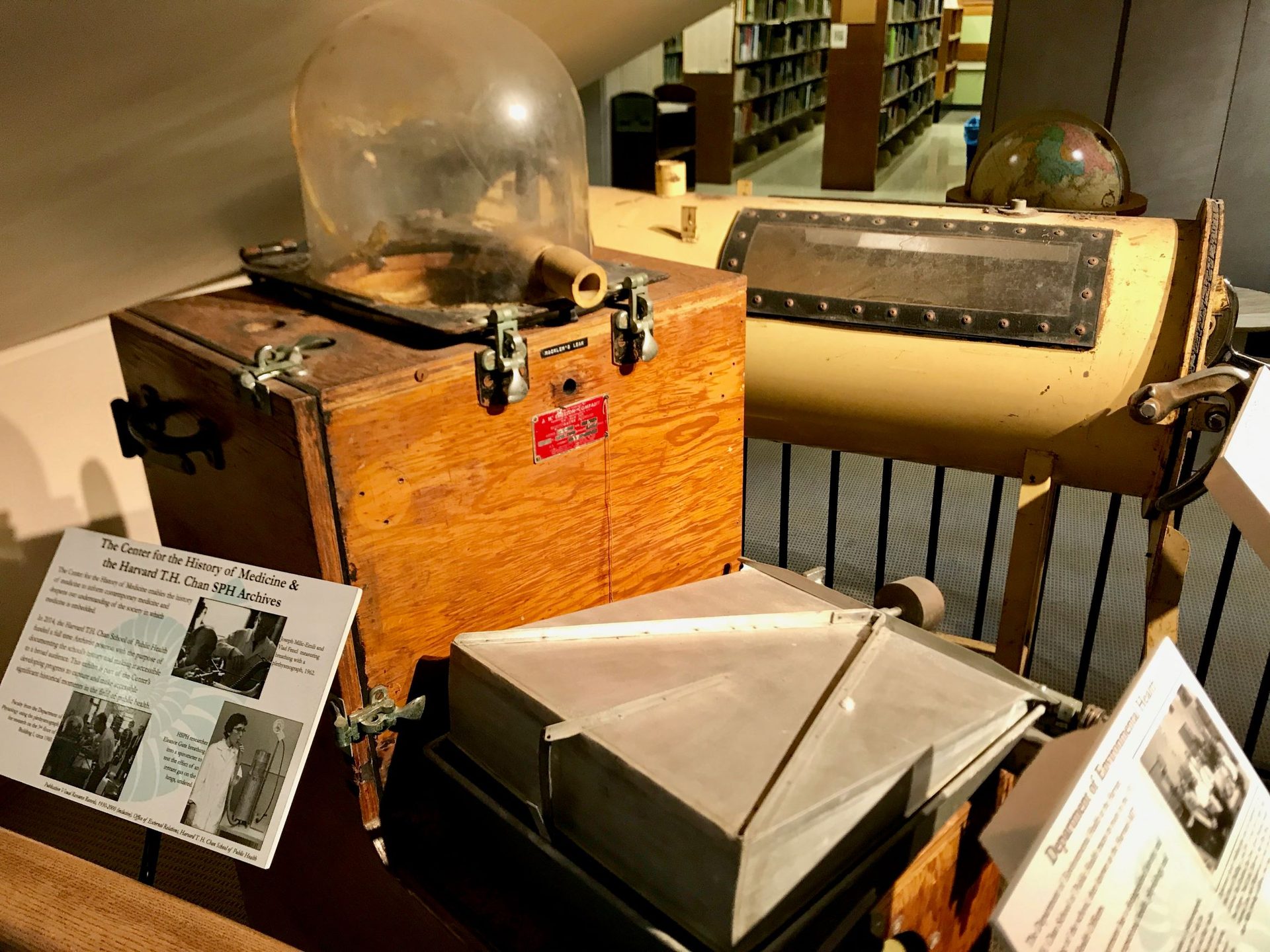
- Photos by Luca Ambrosio (August 2017) and page layout by Annamaria Palese @ (April 2019)
- Locate the item on this Google Map